
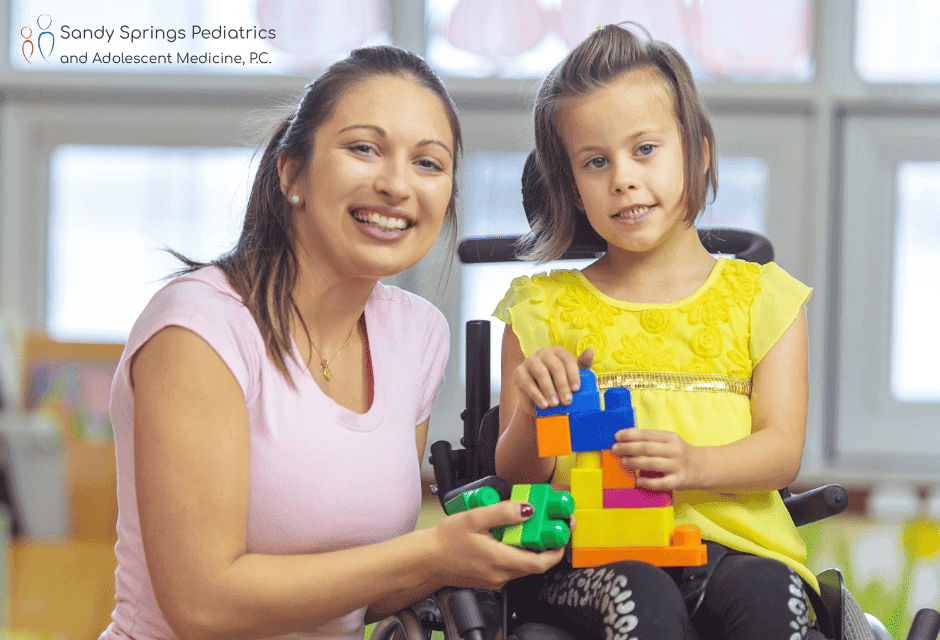
International Day of Persons with Disabilities is observed each year on December 3. The day was established by the United Nations to promote understanding of disability, highlight the rights and well-being of people with disabilities, and encourage inclusive practices across healthcare, education, and community life.
For pediatric practices like ours, this observance is an opportunity to recognize children of all abilities, address misconceptions with facts, and reaffirm the importance of accessible, compassionate healthcare for every family.
Why International Day of Persons with Disabilities is celebrated in December
International Day of Persons with Disabilities was proclaimed in 1992 by the United Nations as part of a broader effort to advance human rights and inclusion for people with disabilities worldwide. December was chosen to align with international initiatives focused on social development, equity, and human rights at the end of each calendar year.
The observance emphasizes that disability inclusion is not limited to a single sector. It applies to healthcare, education, transportation, employment, and community participation. For children, inclusion begins early, with access to appropriate medical care, developmental support, and family-centered services.
How disability is defined in pediatrics
Disability is a broad term that refers to conditions that may affect physical movement, sensory function, communication, learning, behavior, or overall development. In pediatrics, disabilities may be present at birth, develop during early childhood, or arise later due to illness or injury.
Disabilities can be visible or invisible. Some children require assistive devices or therapies, while others may need academic accommodations, behavioral support, or medical monitoring that is not outwardly apparent.
Importantly, disability is not synonymous with illness. Many children with disabilities are otherwise healthy and thrive with appropriate support.
How common disability is among children
Disability is a common part of childhood health and development.
In the United States, national health data show that millions of children live with one or more developmental, physical, sensory, or behavioral disabilities. These include conditions such as developmental delays, autism spectrum disorder, attention-deficit/hyperactivity disorder, learning disabilities, cerebral palsy, hearing or vision impairment, and chronic medical conditions that affect daily functioning.
Because disabilities are relatively common, pediatric practices routinely care for children with a wide range of abilities and healthcare needs.
Common misconceptions about children with disabilities
Misconception: Disability is rare
Fact: Disabilities are relatively common in childhood. Pediatricians regularly support children with diverse physical, developmental, sensory, and behavioral needs.
Misconception: Children with disabilities are always medically fragile
Fact: Many children with disabilities are medically stable and participate fully in school, activities, and family life. Some require specialized care, while others need minimal medical support.
Misconception: Disability always means intellectual impairment
Fact: Disabilities affect children in different ways. Many children with physical or sensory disabilities have typical cognitive development.
Misconception: Children with disabilities cannot live independent or fulfilling lives
Fact: With appropriate healthcare, education, therapies, and community support, many individuals with disabilities grow into independent adults who lead full and meaningful lives.
Misconception: Disability is always visible
Fact: Many disabilities are not outwardly visible. Learning differences, sensory processing differences, chronic illnesses, and certain neurologic conditions may not be immediately apparent.
The role of pediatric care in supporting children with disabilities
Pediatric care focuses on the whole child, not just a diagnosis. For children with disabilities, this includes:
- Monitoring growth, development, and overall health
- Coordinating care with specialists, therapists, and schools when needed
- Supporting families as children reach developmental milestones at their own pace
- Providing preventive care such as immunizations and routine screenings
- Addressing behavioral, emotional, and social health alongside physical health
Early identification and ongoing care help children reach their fullest potential and support families as their child’s needs evolve over time.
Why inclusive pediatric care matters
Inclusive pediatric care means recognizing that every child deserves respectful, accessible, and individualized healthcare.
Children with disabilities may experience barriers to care, including longer appointment times, communication challenges, sensory sensitivities, or the need for coordinated services. Pediatric practices play an important role in creating an environment where families feel heard, supported, and respected.
Inclusive care also benefits families by fostering trust, continuity, and long-term relationships with healthcare providers who understand a child’s unique needs.
Why Sandy Springs Pediatrics values serving children of all abilities
Serving children with disabilities is not a separate part of pediatric care. It is part of comprehensive, community-based medicine.
Over many years of caring for families in Sandy Springs and surrounding areas, pediatric practices develop long-standing relationships with children as they grow and develop. This continuity allows providers to understand each child’s strengths, challenges, and progress over time.
Supporting children with disabilities also means supporting parents and caregivers, who often navigate complex systems related to education, therapy, and medical care. Consistent pediatric care helps families coordinate services and make informed decisions.
How awareness helps reduce stigma
International Day of Persons with Disabilities encourages communities to move away from stigma and toward understanding.
Stigma often comes from lack of information or exposure. Accurate education helps replace assumptions with facts and promotes empathy. In pediatric healthcare, stigma reduction supports better communication, stronger partnerships with families, and improved health outcomes.
Using respectful language, focusing on abilities rather than limitations, and recognizing each child as an individual are key components of inclusive care.
Why December awareness matters for families
December is a time when families reflect on health, community, and shared responsibility. Observing International Day of Persons with Disabilities during this month reinforces the importance of inclusion as a year-round commitment rather than a one-day focus.
For children, early experiences of acceptance and support contribute to long-term emotional and social well-being. Pediatric healthcare plays a role in shaping those experiences through education, advocacy, and family-centered care.
A note of pride in serving our community
International Day of Persons with Disabilities is also a moment to reflect on the responsibility and privilege of caring for children of all abilities. Pediatric medicine is rooted in long-term relationships, trust, and understanding, and that is especially meaningful for families navigating developmental differences, chronic conditions, or disabilities.
For decades, Sandy Springs Pediatrics has cared for children with a wide range of abilities and healthcare needs. Serving this part of our community is not an exception to our work—it is an essential part of it. Supporting children with disabilities means listening closely to families, coordinating care thoughtfully, and recognizing each child as an individual with unique strengths and needs.
We are proud to provide inclusive, respectful, and comprehensive pediatric care to children of all abilities and to continue serving families throughout Sandy Springs and surrounding communities with consistency, compassion, and commitment. To schedule an appointment with one of our Board-Certified pediatricians, call our office at (404) 252-4611 or conveniently request a visit via our ‘Contact Us’ form at the bottom of our homepage.