
As summer begins to wrap up and children prepare to return to school in August, many families start shifting their focus from vacations and pool days to school supplies, sports schedules, carpools, after-school care, and earlier bedtimes. Even as routines change, water safety remains important. In Sandy Springs, East Cobb, and the greater Atlanta area, warm weather often continues well after the first day of school, and children may still spend time around neighborhood pools, hotel pools, lake houses, splash pads, boating activities, and backyard water play.
Water safety is sometimes treated as a beginning-of-summer topic, but drowning risk does not end when school begins. Late summer can create its own set of risks because schedules are busier, families are transitioning between routines, and water activities may happen during weekends, Labor Day travel, birthday parties, sports team gatherings, and after-school playdates. Parents may also assume that because children spent the summer swimming, they need less supervision. In reality, swimming experience does not replace active adult supervision.
Drowning remains one of the most serious preventable risks for children. According to the CDC, more children ages 1 to 4 die from drowning than from any other cause of death. For children ages 5 to 14, drowning is the second leading cause of unintentional injury death after motor vehicle crashes. These facts are a reminder that water safety applies to toddlers, school-age children, and older children, not only to families with young swimmers.
The American Academy of Pediatrics emphasizes that drowning prevention requires multiple layers of protection because no single strategy can prevent every emergency. Proven prevention methods include effective supervision, functional barriers, water competency, life jacket use when boating, and early rescue and resuscitation when an emergency occurs. These layers are still necessary at the end of summer, even when a child has taken swim lessons or spent several months around water.
One late-summer risk is reduced supervision during familiar activities. By August, many children have become more comfortable around pools, lakes, and water parks. Comfort can lead to overconfidence, especially in school-age children who believe they are stronger swimmers than they are. Adults may also feel less alert around familiar pools or repeat activities. Familiarity does not remove the need for supervision. Drowning can happen quickly and silently, and children should be watched closely any time they are in or near water.
Back-to-school season also brings more handoffs between adults. A child may be with parents one day, grandparents the next, a babysitter after school, a friend’s family on the weekend, or a camp program during the final weeks of summer. Water safety can break down when adults assume someone else is watching. In group settings, one responsible adult should be clearly assigned to watch children in or near the water. Safe Kids Worldwide promotes the use of a “Water Watcher,” which is an adult whose role is to supervise children near water without distractions and then hand that responsibility to another adult when needed.
Late-summer pool parties and back-to-school gatherings should include clear supervision plans. If a child is invited to a pool party, parents should know whether children will be swimming, whether a lifeguard will be present, which adult is responsible for watching the water, how many children will be swimming at one time, and whether younger or weaker swimmers will be kept within close reach. These questions are part of safety planning and are especially important when parents will not be staying for the entire event.
After-school routines can also create water safety concerns. Some children go to a neighbor’s house, a relative’s home, or an after-school program before a parent arrives. If any of those locations have a pool, hot tub, pond, creek, fountain, or nearby body of water, parents should ask how access is restricted and how children are supervised. The CDC notes that drowning can happen even when children are not expected to be near water, including when they gain unsupervised access to pools.
Water safety also matters for families finishing summer travel. Hotels, vacation rentals, lake houses, and family homes may have unfamiliar layouts and unexpected water access. Before settling into a rental property or hotel, parents should identify pool gates, door locks, hot tub covers, balconies, docks, ponds, and any direct path a child could take to water. Young children may wake early, explore unfamiliar spaces, or follow older children outside. In these settings, locked doors, secure gates, and close supervision are important layers of prevention.
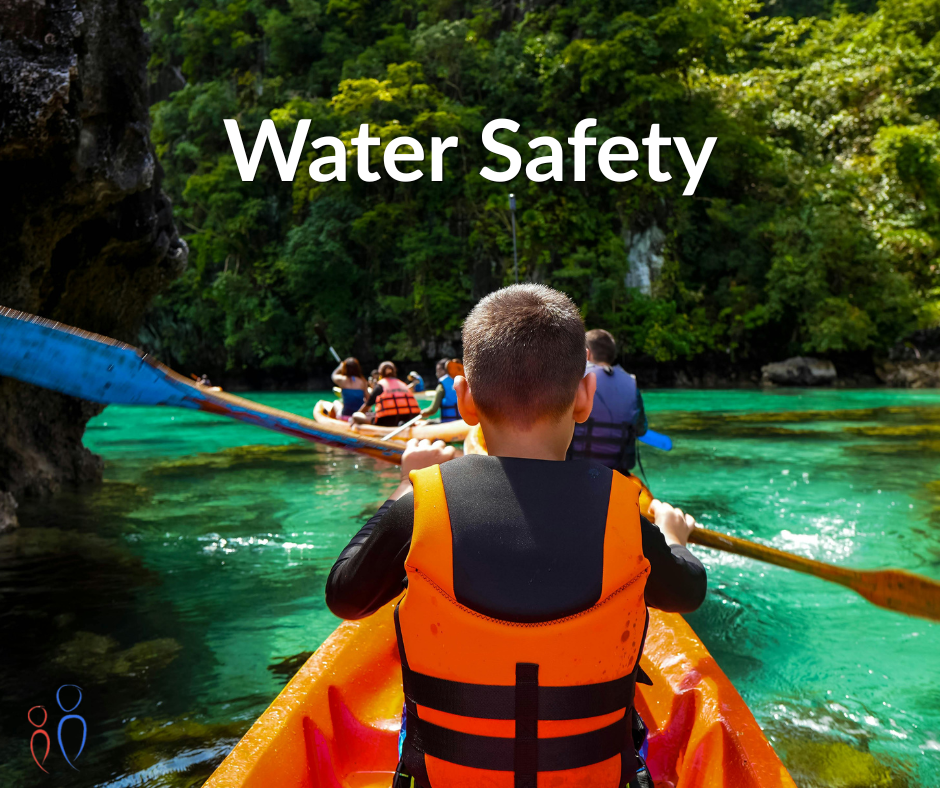
Open water requires additional caution because lakes, rivers, and beaches are different from swimming pools. Open water may have uneven surfaces, currents, changing depth, poor visibility, boat traffic, and distance from shore. The American Academy of Pediatrics’ HealthyChildren.org states that children should wear properly fitted, U.S. Coast Guard-approved life jackets when they are in, on, or near natural bodies of water such as lakes and rivers. It also notes that floaties, water wings, and inflatable toys should not be relied on to prevent drowning.
Parents should also continue to use caution with smaller water hazards at home. Bathtubs, buckets, toilets, inflatable pools, outdoor containers, fountains, and drainage areas can create risks for young children. Safe Kids Worldwide notes that young children can drown in as little as one inch of water and recommends emptying tubs, buckets, containers, and children’s pools immediately after use. Bathroom doors, laundry room doors, and toilet lids should also be kept closed when young children are in the home.
Older children and teens need water safety guidance as they return to school routines. They may attend pool gatherings, lake weekends, youth group events, sports team parties, or unsupervised outings with friends. Teens should understand that strong swimming ability does not eliminate risk. Swimming alone, night swimming, diving into unknown water, rough play, boating without life jackets, and substance use around water all increase danger. Clear family rules should remain in place even when children are old enough to be more independent.
Swim lessons are an important safety tool, but they do not make a child drown-proof. The American Academy of Pediatrics recommends swim lessons as one layer of drowning prevention and notes that many children may be ready to begin lessons starting at age 1, depending on the child’s development and readiness. Children who have taken swim lessons still need supervision, and parents should continue reinforcing water rules as children grow.
Pediatricians can help families think through water safety based on a child’s age, development, swimming ability, behavior, medical history, and school-year routine. A toddler, a preschooler, a child with autism, a child with ADHD, a beginner swimmer, a confident school-age swimmer, and a teenager may all need different safety conversations. Back-to-school checkups, sports physicals, camp forms, and well visits are appropriate times to discuss water safety, especially if a child will continue to be around pools, lakes, or after-school environments with water access.
As families prepare for August and the start of a new school year, water safety should remain part of the transition plan. Pool season, lake weekends, warm-weather travel, and outdoor gatherings may continue even after backpacks are packed and school calendars are posted. Clear supervision, secure barriers, appropriate life jacket use, swim skill development, and emergency preparedness remain important throughout late summer and into the school year.
At Sandy Springs Pediatrics, we encourage families to treat water safety as an ongoing part of child health, not just a seasonal reminder. Before a child attends a pool party, after-school playdate, lake weekend, hotel stay, or end-of-summer gathering, parents should know who is supervising, how water access is controlled, and what safety measures are in place. A new school year can bring new routines, but children still need consistent protection around water.
To schedule a visit with Sandy Springs Pediatrics, call 404-252-4611 or request an appointment online.