
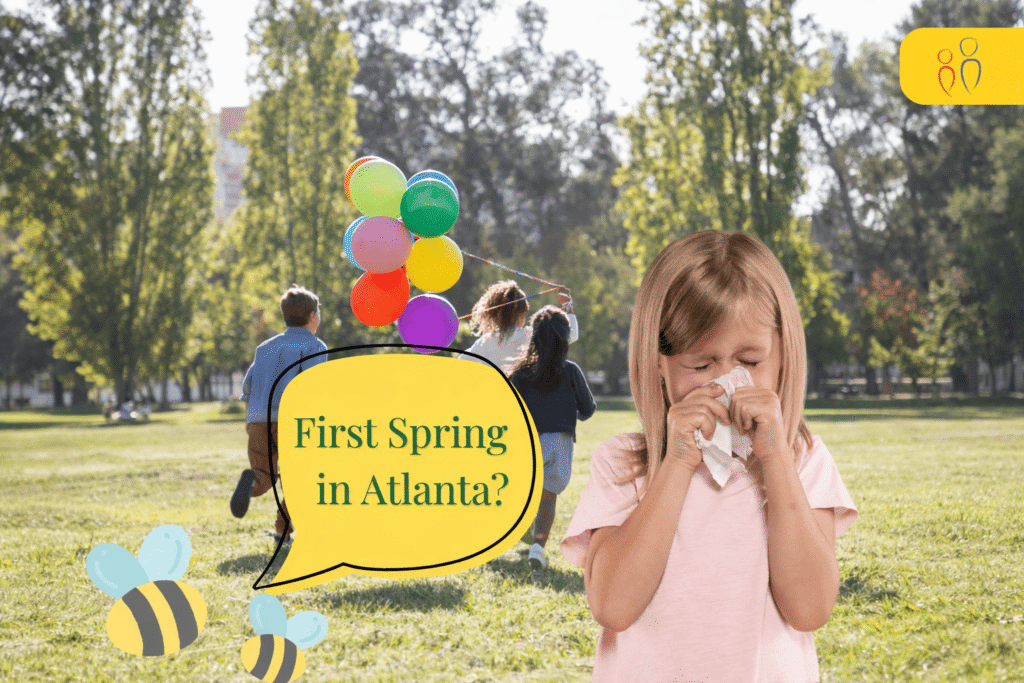
Each spring, Atlanta experiences some of the highest pollen levels in the United States. Tree pollen—particularly from oak, pine, and birch—peaks across North Georgia between March and April, often creating the visible yellow-green coating that many residents recognize on cars, sidewalks, and outdoor surfaces.
For families who are new to Sandy Springs, East Cobb, or the greater North Atlanta area, this level of pollen exposure can be unexpected. Many parents first notice symptoms in their children during their first spring season here, often after searching for terms like “pediatrician for allergies near me,” “child coughing in spring,” or “why does my child have constant congestion.”
Seasonal allergies, or allergic rhinitis, occur when the immune system reacts to airborne pollen. In children, this response can affect not only the nose and eyes, but also sleep, energy levels, and concentration. Understanding how symptoms present at different ages—and how to distinguish allergies from a sinus infection—can help parents respond appropriately and avoid unnecessary delays in care.
Why Pollen Exposure in Atlanta Feels Different
Atlanta’s climate plays a significant role in the intensity of allergy season. A long growing season, combined with dense tree coverage, leads to sustained high pollen counts for weeks at a time. Unlike short-lived exposures in other regions, children in North Atlanta are often exposed daily, which can lead to persistent symptoms rather than short episodes.
This ongoing exposure is one of the reasons allergies may appear more severe or longer-lasting, particularly for children who have recently moved to the area and are experiencing these triggers for the first time.
Infants and Toddlers (Ages 0–2): Early Symptoms and Diagnostic Challenges
In very young children, seasonal allergies are less common but not impossible. Because infants and toddlers frequently experience viral upper respiratory infections, distinguishing between a cold and early allergy symptoms can be challenging.
At this stage, symptoms such as ongoing nasal congestion, disrupted sleep, or mouth breathing may raise concern. Allergies are more likely when symptoms persist beyond typical illness timelines and occur without fever. They may also fluctuate depending on time spent outdoors.
True sinus infections are uncommon in this age group due to underdeveloped sinus anatomy. However, worsening symptoms, thick nasal discharge, or the development of fever may indicate a secondary infection requiring evaluation.
If symptoms are prolonged, affecting feeding or sleep, or recurring frequently, a pediatrician can help determine whether the cause is environmental allergies, infection, or another underlying condition.
Preschool and Early Elementary (Ages 3–7): When Allergies Become More Defined
Between the ages of three and seven, children are more likely to develop classic seasonal allergy symptoms. These often include sneezing, clear nasal drainage, nasal congestion, and itchy or watery eyes.
At this stage, patterns begin to emerge. Symptoms may worsen after outdoor play or during high pollen days and improve when exposure is reduced. Parents may notice behaviors such as frequent nose rubbing, throat clearing, or persistent coughing, particularly at night.
A sinus infection becomes more likely when symptoms follow a different pattern. Instead of fluctuating, they persist without improvement for more than 10 days, worsen after initial improvement, or are accompanied by thicker nasal discharge and facial discomfort.
When symptoms begin to interfere with sleep, daily activities, or school participation, it is appropriate to seek guidance from a pediatrician. Early management can reduce symptom severity throughout the remainder of the season.
School-Aged Children (Ages 8–12): Recognizing Patterns and Complications
As children grow older, they are better able to describe their symptoms, which can help clarify whether they are experiencing allergies or something more complex. Seasonal allergies often follow a predictable course, aligning with pollen counts and improving with appropriate treatment.
However, this age group is also more susceptible to complications if symptoms are not well controlled. Persistent nasal inflammation can contribute to sinus pressure, headaches, and disrupted sleep. Over time, this may increase the likelihood of developing a sinus infection.
A key distinction is progression. Allergy symptoms tend to remain consistent, while sinus infections often intensify, leading to increased facial pressure, dental discomfort, or new-onset fever.
If symptoms are recurring each season, not responding to initial treatment, or leading to repeated infections, further evaluation can help guide more targeted management.
Teenagers: Increased Exposure and More Persistent Symptoms
Teenagers often experience a combination of environmental exposure and cumulative sensitivity from prior allergy seasons. Outdoor activities, sports, and social environments can increase pollen exposure, while academic demands may make symptoms more noticeable due to fatigue and difficulty concentrating.
At this stage, untreated allergies may contribute to chronic nasal congestion, ongoing sinus inflammation, or even allergy-related asthma symptoms. Teens may report persistent headaches, pressure, or reduced ability to focus, prompting searches for “sinus pressure relief” or “allergy symptoms not going away.”
A sinus infection should be considered when symptoms change in intensity, particularly if they include thick nasal discharge, worsening congestion, or facial pain lasting beyond 10 days.
When symptoms begin to affect sleep, school performance, or physical activity, evaluation is important to prevent longer-term complications.
Practical Steps to Reduce Pollen Exposure
While pollen cannot be avoided entirely in Atlanta, reducing exposure can significantly improve symptoms. Children benefit from simple, consistent measures such as changing clothes after outdoor play, showering in the evening, and keeping windows closed during peak pollen days.
Indoor air quality also plays a role. Air conditioning and regular filter changes can help reduce indoor pollen levels, while washing bedding frequently removes accumulated allergens.
These strategies, combined with appropriate medical management when needed, form the foundation of effective allergy control.
When to Contact Your Pediatrician
Understanding when to seek care is one of the most important aspects of managing spring allergies. While mild symptoms can often be managed at home, certain patterns indicate the need for evaluation.
Persistent symptoms that do not improve, worsening congestion, disrupted sleep, or signs of a possible sinus infection should prompt a visit. Additionally, if symptoms interfere with school, activities, or overall well-being, further guidance is beneficial.
Pediatricians can help determine whether symptoms are consistent with seasonal allergies, a sinus infection, or another condition, and provide a treatment plan tailored to the child’s age and needs.
Supporting Families Through Atlanta’s Allergy Season
At Sandy Springs Pediatrics, we enjoy helping families understand what to expect, how to manage symptoms effectively, and when additional care is needed. When appropriate, we can also provide referrals to trusted allergy and ENT specialists in the Atlanta area to ensure comprehensive support. (404) 252-4611