
Head injuries often rise during bike and scooter season, but many of these injuries are preventable. As warmer weather brings children outdoors to ride bicycles, scooters, skateboards, roller skates, and other wheeled recreational equipment, pediatric providers commonly see an increase in accident-related injuries. While outdoor play is an important part of childhood development and physical health, it also comes with risks that families should understand.
According to the Centers for Disease Control and Prevention (CDC), helmets significantly reduce the risk of serious head and traumatic brain injuries during bicycle crashes. Despite clear safety recommendations, many children continue to ride without helmets or wear helmets that are poorly fitted or improperly secured. The encouraging news is that parents can take meaningful steps to help lower injury risk.
Why Head Injuries Increase During Warmer Months
Spring and summer often bring a noticeable increase in bicycle, scooter, and recreational wheeled activity. With more time spent outdoors, emergency departments across the country also see increased visits related to falls and crashes involving bicycles, scooters, skateboards, and electric recreational devices.
Falls remain the most common cause of injury, although collisions with vehicles, fixed objects, and other riders also contribute. Head and facial injuries are among the most frequently reported concerns during these accidents. Even low-speed falls can result in significant injuries including concussions, facial trauma, dental injuries, skull fractures, or traumatic brain injuries.
Children face unique risks because their brains are still developing and their balance, coordination, and judgment skills continue to mature throughout childhood and adolescence. Younger riders may also struggle to anticipate hazards or recognize traffic dangers quickly enough to react safely.
Helmet use and protective gear do not eliminate risk entirely, but they can help reduce both the likelihood and severity of injury.
Understanding Pediatric Head Injuries
Head injuries occur when a blow, impact, or sudden movement affects the head or brain. Injuries may range from mild to severe and can occur during seemingly routine falls.
Concussions are among the most common pediatric brain injuries and may occur even without visible cuts or bruising. A child does not need to lose consciousness to experience a concussion.
Symptoms may appear immediately or develop gradually over several hours and can include headache, dizziness, nausea, vomiting, blurred vision, fatigue, sensitivity to light or sound, confusion, balance problems, difficulty concentrating, or changes in mood and behavior.
Because concussion symptoms are not always obvious at first, parents should monitor children carefully after falls or impacts and seek medical evaluation if symptoms develop or worsen.
Why Helmets Matter
Helmets are specifically designed to absorb and disperse impact forces during a crash or fall. Without a helmet, much of the force from an impact is transferred directly to the skull and brain.
Research has consistently shown that properly worn helmets lower the risk of serious head injuries during bicycle crashes. Helmets work best when they are the correct size, designed for the intended activity, and worn properly every ride.
It is important to understand that helmets cannot prevent every injury and do not guarantee protection against all concussions or severe trauma. However, they remain one of the most effective injury prevention tools available.
Helmet Safety for Toddlers and Young Riders
Helmet habits should begin early.
Children younger than one year of age generally should not ride on bicycles or in bike trailers unless appropriately supported and following pediatric and manufacturer guidance. Once toddlers begin using ride-on toys or balance bikes, parents can begin establishing helmet routines.
For toddlers and preschool-aged children, helmets should be lightweight, appropriately sized, and comfortable enough for consistent wear. Oversized helmets may slide or tilt and fail to provide proper protection.
Young children learn through repetition and parental modeling. When helmets become a routine expectation rather than an occasional choice, children are more likely to continue these habits as they grow.
Helmet Safety for Preschool and Elementary-Age Children
Children between preschool and elementary school ages are often enthusiastic riders but are still developing coordination and safety awareness.
This is a common stage for learning bicycles and scooters, which means falls are expected. Some children may resist helmets if they feel uncomfortable or interfere with play.
Parents can improve compliance by allowing children to help choose helmet colors or designs while still ensuring the helmet meets appropriate safety standards and fits correctly.
Growth during these years can be rapid, making regular fit checks especially important. A helmet that fit appropriately last season may no longer provide adequate protection.
Helmet Safety for Tweens and Teenagers
As children become more independent, riding habits often change. Older children and teenagers may ride faster, travel farther, and spend more time riding with peers.
This age group may be more likely to skip helmets, remove them mid-ride, or underestimate injury risks.
The growing popularity of e-bikes and electric scooters adds additional concern because higher speeds may increase crash severity. Helmet use remains important for bicycles, e-bikes, scooters, skateboards, longboards, and roller sports.
Experience does not replace protective gear. Even skilled riders remain vulnerable to unexpected falls or collisions.
How to Ensure Proper Helmet Fit
A helmet only works as intended when it fits correctly.
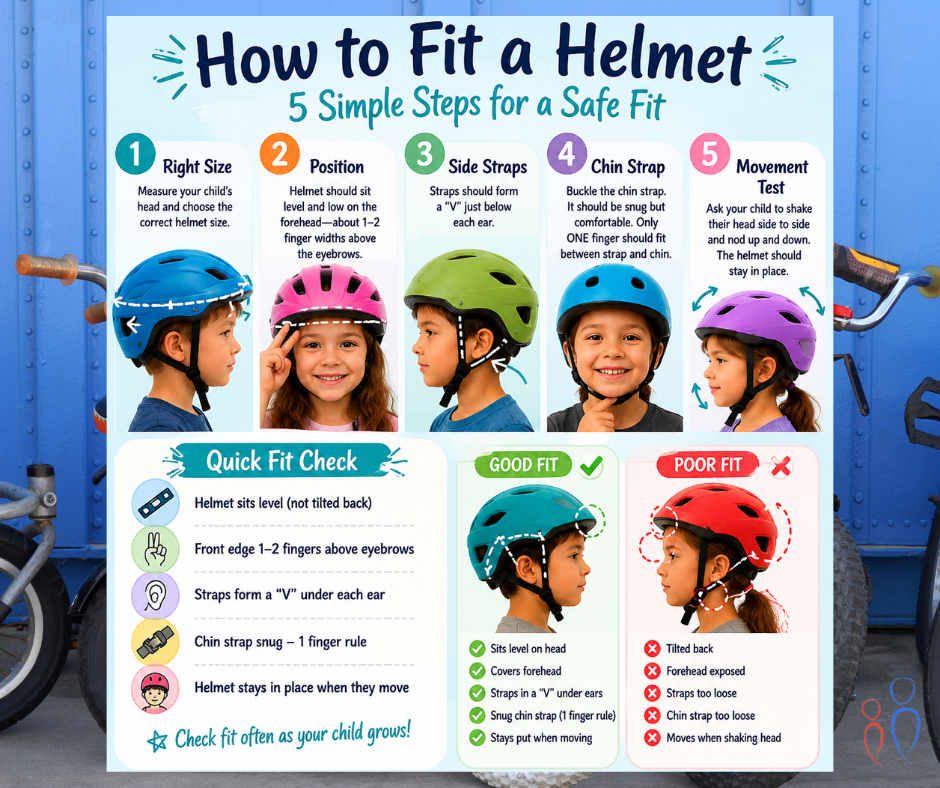
The first step is choosing the correct size. Parents can measure a child’s head using a soft measuring tape placed approximately one inch above the eyebrows and compare that measurement with manufacturer sizing charts. Helmet sizing varies between brands.
Once sized, the helmet should sit level on the child’s head and rest low across the forehead. One of the most common fitting mistakes is wearing a helmet tilted too far backward, leaving the forehead exposed.
The front edge of the helmet should rest approximately one to two finger widths above the eyebrows.
Side straps should form a “V” shape around each ear. Loose or uneven straps may allow excessive helmet movement during a fall.
The chin strap should fit snugly but comfortably. A helpful guideline is the “one-finger rule,” meaning only one finger should fit comfortably between the strap and the chin.
Parents can also perform a simple movement test. Ask the child to shake their head side to side and nod up and down. The helmet should stay secure, and the skin on the forehead should move with the helmet rather than the helmet shifting independently.
What Helmet Certifications Parents Should Look For
Not all helmets are interchangeable.
Parents should look for helmets that meet recognized safety standards and are designed for the intended activity.
For bicycle helmets sold in the United States, families should look for a Consumer Product Safety Commission (CPSC) certification label.
Certain sports may require additional or sport-specific helmet designs. Skateboarding, skiing, football, and cycling involve different types of impacts, and helmets are engineered accordingly.
A bicycle helmet should not automatically be assumed appropriate for every activity.
Why Pads and Protective Gear Matter
While helmets receive the most attention, additional protective gear can also help reduce injury risk.
Children commonly experience wrist fractures, knee injuries, elbow trauma, bruising, and abrasions during falls. Protective pads provide cushioning and may lessen injury severity.
Knee pads are especially helpful for scooters, roller skating, skateboarding, and beginner riders. They should fit securely without restricting movement.
Elbow pads help cushion falls and may reduce bruising and abrasions when children instinctively brace during impact.
Wrist guards are particularly useful for skateboarding, rollerblading, and skating because children often land on outstretched hands during falls. Wrist protection may help reduce fracture risk.
Common Helmet and Safety Mistakes Parents Should Avoid
Even safety-conscious families may unintentionally make mistakes.
One common issue is continuing to use a helmet after a crash. Helmets are designed to absorb impact energy, and damage may occur internally even if no cracks are visible.
Parents should also use caution with secondhand or older helmets. Materials can deteriorate over time from sunlight, heat exposure, and regular wear.
Ignoring fit changes is another frequent problem. Children grow quickly, and helmets should be reassessed regularly.
Loose straps or skipping helmets for short neighborhood rides may also increase injury risk. Many recreational injuries occur close to home during routine rides.
Additional Bike and Scooter Season Safety Tips
Protective gear works best when paired with safe riding habits.
Parents can reinforce safety by encouraging children to ride in appropriate environments, avoid distracted riding, stay alert around driveways and traffic, and use visibility measures when riding near dusk or in low-light conditions.
Headphones should be avoided while riding because they may interfere with awareness of surroundings.
Adult modeling also matters. Research continues to show that children are more likely to wear helmets consistently when parents do the same.
Making Outdoor Play Safer, Not Scarier
Outdoor activity plays an important role in childhood health, confidence, and development. The goal of discussing helmet and protective gear safety is not to discourage riding or play, but to help families approach these activities with prevention in mind.
Helmet use and protective equipment may seem like small steps, but they can make a meaningful difference in reducing injury severity.
As bike and scooter season continues, taking a few extra moments to check helmet fit and safety gear may help children enjoy the outdoors more safely.
If your child experiences a fall, head injury, or symptoms concerning concussion, consult your pediatric provider for guidance and evaluation.