
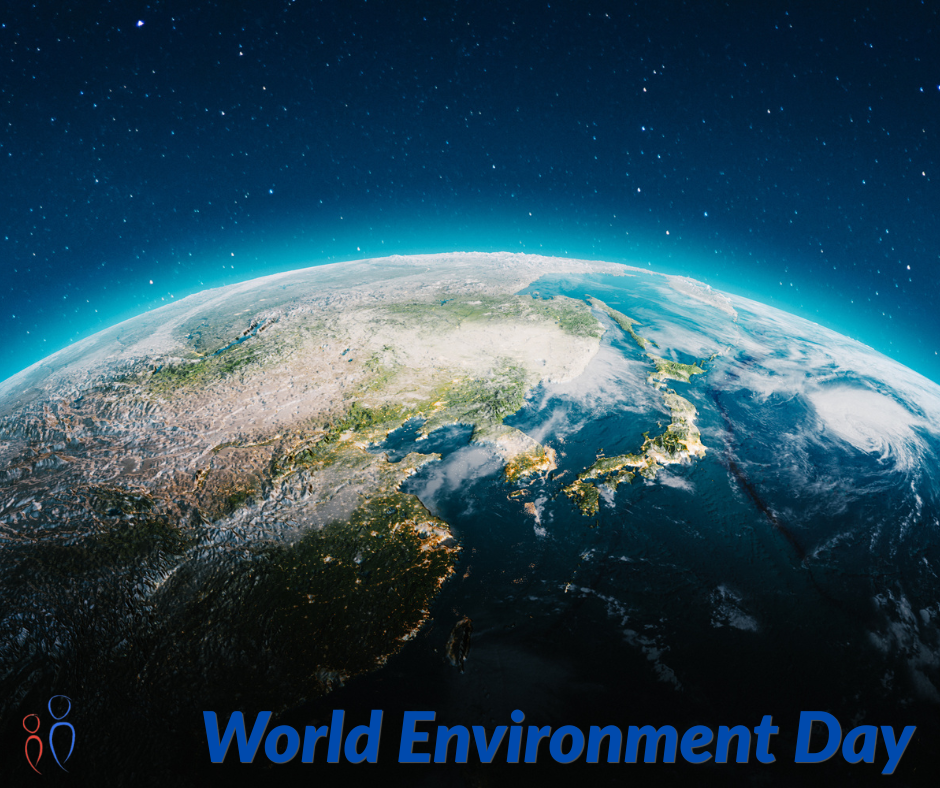
Every year on June 5, countries around the world recognize World Environment Day, a global observance established by the United Nations to raise awareness about environmental challenges and encourage action to protect natural resources. First celebrated in 1973, World Environment Day has grown into one of the world’s largest environmental awareness initiatives, involving governments, schools, organizations, and families across more than 150 countries.
For parents and pediatric providers, World Environment Day offers an opportunity to talk with children about an important topic that affects both present and future generations: caring for the environment.
Environmental health is closely connected to human health. The air children breathe, the water they drink, the food they eat, and the neighborhoods where they play are all influenced by environmental conditions. Helping children understand these connections can support healthier habits, stronger community awareness, and informed decision-making as they grow.
What Is World Environment Day?
World Environment Day was created by the United Nations Environment Programme (UNEP) following the 1972 United Nations Conference on the Human Environment held in Stockholm, Sweden.
The purpose of the observance is to encourage awareness and practical action surrounding environmental issues affecting communities worldwide.
Each year focuses on a different environmental theme, ranging from pollution and biodiversity to climate, restoration, water protection, and sustainable practices.
The goal is not simply to raise concern, but to encourage education and solutions.
For children, these conversations may provide early opportunities to understand how everyday actions connect to larger environmental systems.
Why Environmental Awareness Matters for Children
Children are often taught about recycling or keeping parks clean, but environmental education extends beyond litter collection or sorting plastic.
Environmental health affects childhood development and long-term public health.
According to the World Health Organization, environmental factors contribute to a substantial burden of disease worldwide. Air quality, water safety, chemical exposure, and climate-related conditions can all influence health outcomes.
Children may be particularly vulnerable to environmental exposures because their bodies and organs are still developing. They breathe more rapidly than adults, spend significant time outdoors, and may have greater exposure to environmental contaminants relative to body size.
This does not mean children should become fearful about environmental issues. Rather, age-appropriate education can help children understand how communities and individuals contribute to healthier surroundings.
Learning environmental responsibility during childhood may also encourage lifelong habits.
Environmental Health and Childhood Health in Georgia
Many parents are surprised to learn how closely environmental health and pediatric health are connected. In Georgia, where children spend significant time outdoors year-round, environmental conditions can play an important role in overall wellness.
Air quality, for example, may influence respiratory health and has been associated with asthma symptoms and breathing concerns. During warmer months in metro Atlanta and North Georgia, higher pollen counts, ozone levels, and seasonal air quality concerns may affect some children, particularly those with asthma or allergies.
Water quality also plays an important role in community health. Whether families are spending time at lakes, splash pads, pools, rivers, or simply staying hydrated during Georgia’s warmer seasons, clean and safe water remains essential for childhood health and illness prevention.
Georgia’s climate can also bring environmental factors that affect outdoor safety. High temperatures and humidity may increase risks related to dehydration and heat illness, while wooded areas, parks, and outdoor recreation spaces may expose families to ticks and mosquitoes that can carry certain illnesses.
Because environmental topics are often discussed globally, children may understand them more clearly when connected to everyday experiences close to home.
Examples may include recognizing how poor air quality or high pollen days can affect outdoor play, understanding why trees provide important shade and cooling during Georgia summers, learning how litter may impact local parks and waterways, or seeing how protecting green spaces benefits both wildlife and neighborhoods.
These local, real-world examples help children understand that caring for the environment is not only about protecting nature—it is also about supporting healthier communities and healthier lives here in Georgia. Healthy environments contribute to both physical and emotional well-being, making environmental awareness an important part of childhood health education.
Why Teaching Environmental Responsibility Early Matters
Childhood is a period of habit formation.
Research in child development suggests that early experiences and repeated behaviors help shape long-term attitudes and routines.
Teaching environmental awareness during childhood does not require perfection or large-scale activism.
Instead, many experts encourage practical education centered on responsibility, stewardship, and understanding consequences.
Children who learn about caring for shared spaces may develop stronger awareness of how personal choices affect others.
These lessons can include:
- Respecting nature
- Reducing waste
- Using resources thoughtfully
- Caring for animals and habitats
- Protecting parks and community spaces
Environmental responsibility is often most effective when presented as participation and care rather than guilt or fear.
Common Misconceptions Children May Have About the Environment
Children of different ages often misunderstand environmental issues in ways that are developmentally normal.
Understanding these misconceptions may help parents guide more productive conversations.
Young Children May Believe the Earth Is “Too Big to Hurt”
Preschool and early elementary children often think in concrete terms.
Because the Earth appears large and permanent, some younger children may believe individual actions do not matter or that environmental problems cannot affect something so enormous.
At this age, children may benefit from simple, visible examples.
For example, they may understand how litter affects playgrounds, ponds, or neighborhood wildlife.
Connecting environmental concepts to places they know often improves understanding.
School-Aged Children May Assume Recycling Solves Everything
Many children learn about recycling early and may view it as the primary or only environmental solution.
While recycling can reduce waste and conserve resources, experts emphasize that environmental responsibility involves multiple strategies.
These include:
- Reducing unnecessary waste
- Reusing materials
- Conserving energy
- Protecting water
- Supporting sustainable habits
Parents can help children understand that recycling is helpful but represents only one piece of broader environmental stewardship.
Older Children and Teens May Feel Problems Are Too Large to Affect
Older children and adolescents may become aware of climate concerns, pollution, or environmental headlines and feel overwhelmed or powerless.
This response is increasingly recognized among youth.
Some teenagers may believe environmental challenges are so large that individual or community actions have little value.
Research in environmental education suggests that focusing on realistic, practical actions and community engagement may help foster constructive participation rather than hopelessness.
Helping teens understand that environmental progress often occurs through combined efforts can support balanced conversations.
Environmental Choices Children Encounter Every Day
Children make environmental decisions more often than many families realize.
These moments provide opportunities for learning without requiring complicated discussions.
Examples may include:
- Turning off unused lights
- Avoiding littering
- Using refillable water bottles
- Reusing school supplies
- Protecting plants and wildlife
- Conserving water while brushing teeth
- Participating in neighborhood cleanups
- Walking or biking when safe and appropriate
These actions may appear small individually, but they reinforce the concept that shared environments require collective care.
Helping Children Understand Waste and Plastic Use
Plastic pollution is one environmental issue children frequently hear about.
Because plastic is durable and widely used, discarded plastic materials may persist in the environment for long periods.
Children may incorrectly assume that placing an item in a recycling bin guarantees it will become a new product.
In reality, recycling systems vary by community, and not all materials are recyclable or successfully processed.
This is one reason many environmental experts encourage waste reduction and reuse in addition to recycling.
Parents can discuss practical examples such as:
- Using reusable lunch containers
- Choosing durable products
- Reducing single-use waste when possible
- Avoiding litter around waterways and parks
The goal is not perfection, but increased awareness.
The Importance of Nature for Childhood Development
Environmental conversations are not solely about problems.
Time spent outdoors and interaction with nature offer meaningful developmental benefits.
Research has associated outdoor play and nature exposure with:
- Physical activity
- Motor development
- Stress reduction
- Social development
- Improved attention
- Emotional well-being
Children who spend time exploring natural environments may develop stronger appreciation for conservation and environmental care.
This may include:
- Parks
- Trails
- Gardens
- Backyards
- Nature centers
- Family walks
These experiences often build environmental awareness more effectively than lectures alone.
Talking About Environmental Issues Without Creating Fear
Some environmental topics can feel overwhelming for children.
Parents may wonder how much information is appropriate or worry about causing anxiety.
Developmental experts often recommend balancing honesty with reassurance.
Children benefit from accurate information paired with practical solutions and supportive conversation.
Rather than emphasizing catastrophe or blame, families may focus on shared responsibility and positive action.
Younger children may need simple explanations and reassurance that adults are working to help protect communities and natural spaces.
Older children may appreciate opportunities to ask questions and discuss solutions thoughtfully.
The goal is informed awareness, not fear.
Making World Environment Day Meaningful for Families
World Environment Day can serve as more than a calendar observance.
It may provide families an opportunity to discuss how environmental choices connect to both community health and personal responsibility.
Meaningful activities do not need to be elaborate.
Families may consider:
- Neighborhood cleanups
- Park visits
- Gardening
- Nature walks
- Recycling education
- Wildlife observation
- Water conservation challenges
- Conversations about reducing waste
These experiences can help children connect environmental concepts with daily life.
Helping Raise Environmentally Aware Children
Children do not need to solve environmental challenges alone, nor are families expected to be perfect in their environmental choices.
What matters most is helping children develop awareness, responsibility, and respect for the world around them.
World Environment Day reminds communities that environmental stewardship is both a local and global responsibility.
By teaching children how environmental health connects to human health and by encouraging practical, age-appropriate habits, families can help raise informed young people who understand that caring for the environment is also part of caring for one another.
As children grow, the lessons they learn about shared responsibility, thoughtful decision-making, and respect for natural resources may continue shaping healthier communities for years to come.