
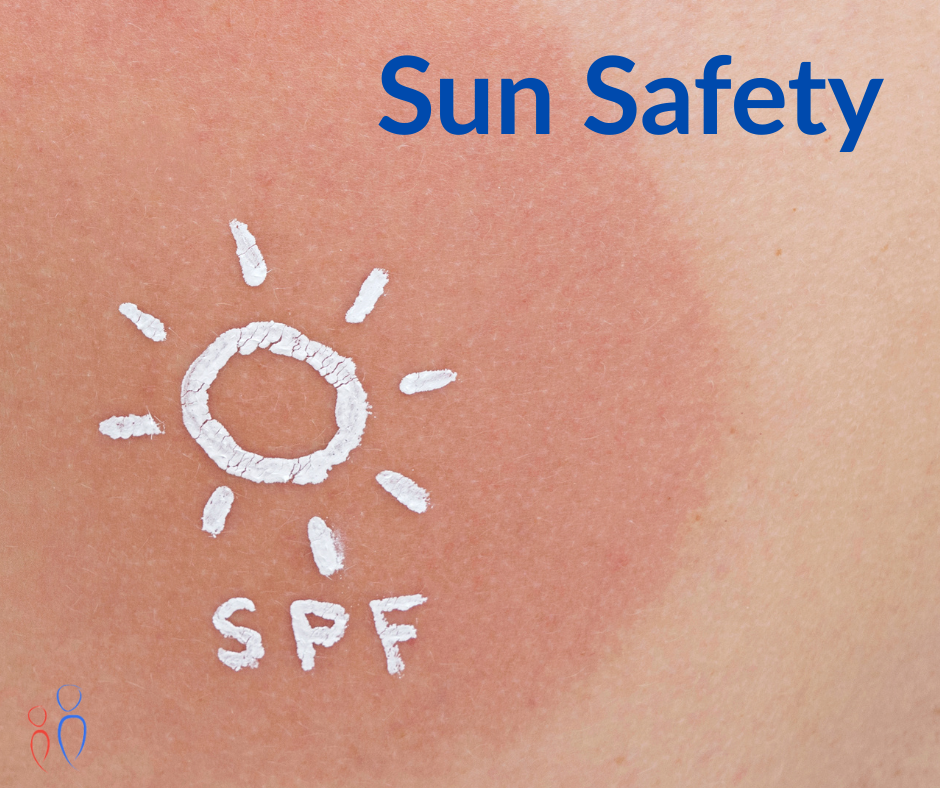
As summer wraps up and children return to school in August, sun safety should remain part of the daily routine. In Georgia, warm weather often continues well into the school year, and children may still spend time outdoors during recess, physical education, sports practices, playground time, pool weekends, lake trips, and after-school activities. Sun protection is not only a beach or vacation concern. It is an important part of everyday pediatric health.
Ultraviolet radiation, or UV radiation, comes from the sun, tanning beds, and sunlamps. The CDC states that most skin cancers are caused by too much exposure to UV light, and that UV rays can damage skin cells. UV protection is important year-round, not only during summer, because UV rays can reach the skin on cloudy and cool days and can reflect off water, cement, sand, and snow. In the continental United States, UV rays are generally strongest from 10 a.m. to 4 p.m. daylight saving time.
For children, sun safety matters because sun exposure accumulates over time. The American Academy of Pediatrics notes that one-quarter of lifetime sun exposure happens during childhood and adolescence. This makes childhood an important time to build consistent protection habits, including shade, protective clothing, hats, sunglasses, and appropriate sunscreen use.
Sunscreen is important, but it is not the only layer of protection
Sunscreen helps protect exposed skin, but it works best when combined with other sun safety measures. The CDC recommends using shade, protective clothing, wide-brimmed hats, sunglasses, and sunscreen together. Clothing made from tightly woven fabric offers better UV protection than thin or loosely woven fabric, and wet clothing provides less UV protection than dry clothing. Hats with a brim all the way around help protect the face, ears, and back of the neck. Sunglasses that block both UVA and UVB rays help protect the eyes and the delicate skin around them.
This is especially relevant during the back-to-school season. A child may have sunscreen applied in the morning but still be outside later for recess, dismissal, sports, or after-school programs. Sunscreen can wear off, and clothing, hats, shade, and timing of outdoor activities remain important throughout the day.
What parents should look for on a sunscreen label
For children older than 6 months, the American Academy of Dermatology recommends sunscreen that offers broad-spectrum protection, SPF 30 or higher, and water resistance. Broad-spectrum means the product protects against both UVA and UVB rays. UVA rays contribute to skin aging and long-term skin damage, while UVB rays are a major cause of sunburn.
SPF 30 is a common pediatric recommendation because it provides strong protection when used correctly. Higher SPF products may block slightly more UVB radiation, but no sunscreen blocks 100% of UV rays. A higher SPF also does not mean a child can stay outside longer without reapplying. The American Academy of Dermatology states that high-number SPF sunscreens last the same amount of time as lower SPF sunscreens and still need to be reapplied approximately every two hours when outdoors, as well as after swimming or sweating.
Water resistance is also important, especially for children who sweat, swim, play sports, or attend outdoor camps. Water-resistant does not mean waterproof. The FDA does not allow sunscreen labels to claim that a product is waterproof or sweatproof because those terms are misleading. Parents should check whether the product is labeled water resistant for 40 or 80 minutes and reapply according to the label, especially after swimming, sweating, or towel drying.
Ingredients that are often preferred for children
Mineral sunscreens, also called physical sunscreens, use zinc oxide, titanium dioxide, or both as active ingredients. These ingredients sit on the skin and help protect against UV rays. The FDA has proposed that zinc oxide and titanium dioxide are generally recognized as safe and effective for sunscreen use.
Mineral sunscreens are often preferred for infants, toddlers, and children with sensitive skin because they may be less irritating. The American Academy of Dermatology states that sunscreens with zinc oxide or titanium dioxide may cause less irritation to the sensitive skin of infants and toddlers. The AAP also recommends zinc oxide or titanium dioxide for sensitive areas such as the nose, cheeks, tops of the ears, and shoulders.
Parents should also understand that words like “baby,” “sport,” and “sensitive skin” are not fully defined by the FDA for sunscreen labeling. The American Academy of Dermatology notes that baby sunscreens commonly contain zinc oxide or titanium dioxide, but parents should still read the active ingredient list instead of relying only on front-label marketing.
Ingredients and products parents may want to avoid
Parents should avoid older or imported sunscreens containing PABA, also called aminobenzoic acid, or trolamine salicylate. The FDA has proposed that these two ingredients are not generally recognized as safe and effective because of safety concerns. The FDA notes that these ingredients are not used in marketed sunscreens any longer, but they are still worth knowing about when checking old products, travel products, or non-U.S. products.
The American Academy of Pediatrics recommends avoiding oxybenzone if possible because of concerns about mild hormonal properties. The AAP also states that preventing sunburn is important and that using any sunscreen is better than using no sunscreen at all. This distinction matters because parents should not skip sun protection entirely if the only sunscreen available contains an ingredient they would not normally choose.
Combination sunscreen and insect repellent products should also be avoided. The AAP recommends using separate products because sunscreen needs to be reapplied more often, while insect repellent should be used more sparingly. When both are needed, sunscreen should be applied first and insect repellent second.
Children with eczema, sensitive skin, or a history of rashes may do better with a mineral, fragrance-free sunscreen. The American Academy of Dermatology notes that products labeled for sensitive skin often avoid fragrance, oils, PABA, and chemical sunscreen ingredients that may irritate sensitive skin. If a child develops a rash or irritation after sunscreen use, parents should stop using that product and discuss alternatives with their pediatrician.
Sun protection for babies younger than 6 months
For babies younger than 6 months, the first line of sun protection is shade and protective clothing. The American Academy of Dermatology recommends keeping babies younger than 6 months out of direct sun when possible and protecting them with lightweight long sleeves, pants, a wide-brimmed hat, sunglasses, and shade from an umbrella, canopy, or stroller hood. Parents should also take care to prevent overheating.
The American Academy of Pediatrics states that for babies younger than 6 months, sunscreen may be used on small areas of the body, such as the face, if protective clothing and shade are not available. This means sunscreen is not the first choice for young infants, but a small amount may be appropriate when sun exposure cannot be avoided.
If a baby younger than 1 year gets sunburned, parents should call the child’s doctor right away. For older children, parents should contact the pediatrician if sunburn causes blistering, significant pain, or fever.
Sun protection for babies and toddlers older than 6 months
For babies older than 6 months, sunscreen can be applied to exposed areas of the body. Parents should use care around the eyes, and if a baby rubs sunscreen into the eyes, the eyes and hands should be wiped clean with a damp cloth. If sunscreen irritates the skin, the AAP recommends trying a different brand or a sunscreen with titanium dioxide or zinc oxide.
Toddlers and preschoolers often need sun protection that accounts for movement, sweating, water play, and frequent hand-to-face contact. Sunscreen should be applied before going outdoors and reapplied at least every two hours, as well as after swimming, sweating, or towel drying. Clothing, hats, shade, and stroller or wagon covers should still be used because sunscreen alone does not prevent all UV exposure.
Sun protection for school-age children
For school-age children, sun safety should become part of the school routine. Children may be outside for recess, PE, sports, field trips, carpool lines, after-school programs, and weekend activities. The CDC specifically notes that recess and daytime outdoor activities can put students at risk if their skin is not protected from too much sun exposure.
Parents should apply sunscreen before school when children will be outdoors and should check the school’s policy on whether children may carry or reapply sunscreen during the day. Hats, sunglasses, shaded play areas, and lightweight protective clothing can also help reduce UV exposure during school and after-school activities.
Sun protection for tweens and teens
Tweens and teens need direct sun safety guidance because they may spend time outdoors with less parent supervision. Sports, band practice, camps, lake weekends, outdoor jobs, and social activities can all create prolonged UV exposure. Teens may also be more likely to believe that tanning is safer than burning.
The CDC states that a suntan is not a sign of health. Any change in skin color after UV exposure, whether a tan or a burn, is a sign of skin injury. The CDC also recommends avoiding artificial sources of UV exposure such as tanning beds and sunlamps.
Parents should also remind teens that sunscreen does not make intentional tanning safe. Sunscreen lowers UV exposure when used correctly, but it should not be used as a way to extend time in the sun for tanning.
Common misconception: cloudy or cooler days are safe
A common misconception is that children do not need sun protection on cloudy or cooler days. UV radiation can still reach the skin when the weather feels mild. The AAP notes that sunburn can occur even on cloudy days because up to 80% of the sun’s UV rays can get through clouds. UV rays can also reflect from water, sand, snow, and concrete.
This is especially important during the back-to-school season, when mornings may feel cooler but UV exposure can still be significant by recess, PE, practice, or dismissal.
Common misconception: sunscreen applied once in the morning lasts all day
Sunscreen wears off and must be reapplied. The CDC recommends reapplying sunscreen if a person stays in the sun for more than two hours and after swimming, sweating, or toweling off. The AAP similarly recommends reapplying every two hours and after swimming, sweating, or drying off with a towel.
This can be challenging during school days, camps, and sports. Parents can plan ahead by applying sunscreen before outdoor activities, sending sunscreen when allowed, choosing protective clothing, and discussing reapplication with coaches, camp staff, or caregivers when children will be outside for long periods.
Common misconception: darker skin does not need sun protection
Children of all skin tones need sun protection. UV radiation can damage skin cells, and the CDC states that most skin cancers are caused by too much exposure to UV light. Sunburn may look different depending on skin tone, but UV exposure can still cause harm.
For children with darker skin tones who are prone to hyperpigmentation, tinted sunscreens may also be helpful. The American Academy of Dermatology notes that visible light from the sun can increase skin darkening, particularly in people with darker skin tones, and that tinted broad-spectrum sunscreens with iron oxide can help protect against the effects of visible light.
Common misconception: sunscreen alone is enough
Sunscreen is an important tool, but it is not a complete sun safety plan. The CDC states that sunscreen works best when combined with other options, including shade and protective clothing. The American Academy of Dermatology also recommends keeping children in shade and dressing them in protective clothing even when sunscreen is being used.
For families, the most effective approach is usually layered protection. This includes applying sunscreen correctly, using shade when possible, choosing hats and sunglasses, dressing children in protective clothing, avoiding peak UV hours when practical, and checking the UV Index on days with extended outdoor plans.
When to talk with your pediatrician
Parents should talk with their pediatrician if a child has frequent sunburns, severe sun sensitivity, a rash after sunscreen use, eczema that worsens with sunscreen, a history of blistering sunburn, unusual moles, or a family history of skin cancer. Some medications can also increase sun sensitivity, so families should ask their pediatrician or pharmacist whether extra sun precautions are needed when a child starts a new medication.
Sun safety is an ongoing part of child health, not just a summer reminder. As children return to school and continue outdoor activities in late summer and early fall, parents should continue using age-appropriate sun protection and choose sunscreen products based on clear label information rather than marketing claims.
At Sandy Springs Pediatrics, we encourage families to make sun protection part of the daily routine for infants, children, and teens. If you have questions about sunscreen ingredients, sensitive skin, sunburn care, or age-appropriate recommendations for your child, our pediatric team can help guide you.
To schedule a visit with Sandy Springs Pediatrics, call 404-252-4611 or request an appointment online.