
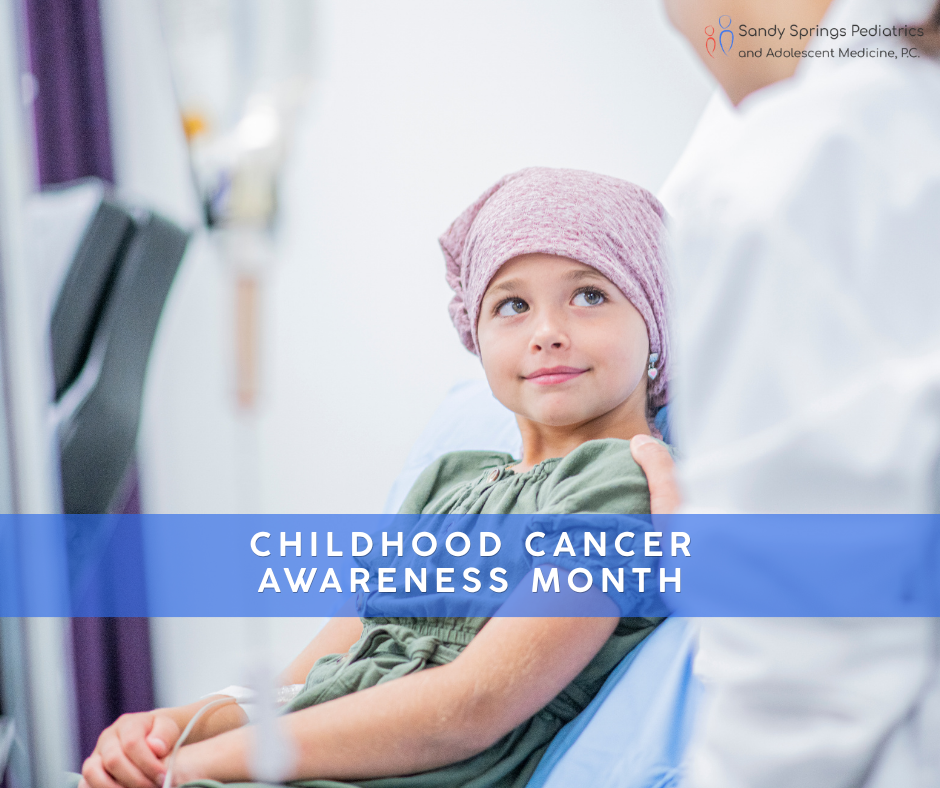
A childhood cancer diagnosis can change a family’s life in an instant. Parents are suddenly learning unfamiliar medical language, meeting pediatric cancer specialists and making important decisions—all while trying to help their child feel safe.
Childhood Cancer Awareness Month, recognized each September, is an opportunity to support children with cancer, childhood cancer survivors and the families caring for them. It is also a time to share reliable information about pediatric cancer diagnosis, treatment advances, family support and long-term survivorship.
What causes childhood cancer?
One of the first questions many parents ask is, “Why did this happen?”
In most cases, childhood cancer cannot be traced to a single identifiable cause. Unlike many adult cancers, pediatric cancers generally develop from genetic changes within growing cells rather than from years of accumulated lifestyle-related risk. These changes usually occur by chance and are not inherited.
A smaller number of childhood cancers are associated with inherited cancer-predisposition syndromes. Based on a child’s diagnosis, medical history and family cancer history, the pediatric oncology team may recommend genetic counseling or genetic testing.
Genetic testing is not necessary for every child, and having relatives with cancer does not automatically mean a child’s cancer was inherited. A genetic counselor can help families understand what testing can—and cannot—tell them.
Understanding a pediatric cancer diagnosis
Childhood cancer is not one disease. The most common types of childhood cancer include leukemia, brain and spinal cord tumors, and lymphoma. Children may also develop neuroblastoma, kidney tumors, bone cancer, soft-tissue sarcoma, germ-cell tumors and other rare pediatric cancers.
Even two children with cancers bearing the same name may have tumors with different genetic or molecular features. Doctors may use blood tests, imaging, a biopsy, bone-marrow testing or molecular testing to determine the exact cancer type and identify characteristics that could influence the treatment plan.
Families should feel comfortable asking the childhood cancer care team to explain:
- The complete name and subtype of the cancer
- Whether the cancer has spread and how its extent is described
- Which tests confirmed the childhood cancer diagnosis
- The goals and expected length of treatment
- The potential benefits and risks of each treatment option
- Whether molecular or genetic testing is appropriate
- Whether a pediatric cancer clinical trial is available
- How treatment could affect growth, learning, hearing, fertility or long-term health
Parents can take notes, ask for written information and request that explanations be repeated in plain language. Families may also seek a second opinion, particularly when a pediatric cancer is rare or the treatment choices are complex. A second opinion may confirm the diagnosis and treatment plan or identify another appropriate option.
Why specialized pediatric oncology care matters
Children are not simply smaller adults. Childhood cancers can behave differently from adult cancers, and children’s growing bodies may respond differently to treatment. Whenever possible, children with cancer should receive care from a pediatric oncology team experienced in diagnosing and treating these diseases.
A childhood cancer care team may include pediatric oncologists, surgeons, radiation oncologists, nurses, pharmacists, dietitians, rehabilitation specialists, social workers, psychologists and child-life specialists. Teachers or school coordinators may also help children remain connected to learning during cancer treatment.
Supportive care is an essential part of pediatric cancer treatment. It may be used to control pain and nausea, maintain nutrition, prevent or treat infections, address sleep or emotional concerns and help children remain as active and comfortable as possible.
Parents should speak with the oncology team before giving a child any new prescription medication, over-the-counter medicine, vitamin, herbal product or dietary supplement. Some products can interfere with cancer treatment or affect bleeding, infection risk or medication levels.
Progress in childhood cancer treatment
The progress made in childhood cancer survival is significant. In the mid-1970s, approximately 58% of children diagnosed with cancer survived for at least five years. Today, approximately 85% of children with cancer are alive at least five years after diagnosis, and many are ultimately considered cured.
An overall childhood cancer survival rate cannot predict what will happen to an individual child. Prognosis varies according to the cancer type, its biological characteristics, whether it has spread, how it responds to treatment and whether it has returned. Some childhood cancers now have very high cure rates, while other pediatric cancers remain difficult to treat.
Modern childhood cancer research increasingly focuses on the molecular changes driving an individual child’s cancer. Molecular testing can sometimes help pediatric oncologists determine whether a targeted cancer treatment may be appropriate.
In 2024, the FDA authorized new targeted treatments for certain children with BRAF-altered low-grade glioma and for patients with relapsed or treatment-resistant leukemia containing a KMT2A genetic change. In 2025, the FDA granted accelerated approval to the first systemic treatment for progressive H3 K27M-mutant diffuse midline glioma.
These treatments apply to narrowly defined groups of patients—not every child with leukemia or a pediatric brain tumor. Accelerated approval also means additional research is required to confirm a treatment’s clinical benefit. However, these developments demonstrate how molecular testing and targeted therapies are creating options for some children whose cancers previously had fewer available treatments.
The role of pediatric cancer clinical trials
Clinical trials have played a central role in improving childhood cancer care. A pediatric cancer clinical trial may evaluate a new medication, a new combination of existing treatments or a way to reduce side effects while maintaining effective cancer control.
Participation in a clinical trial is voluntary. Before deciding, families should receive clear information about:
- The purpose of the study
- How the proposed treatment differs from standard treatment
- Potential benefits and known risks
- Additional appointments or testing
- Costs that may or may not be covered
- Available treatment alternatives
- The family’s right to leave the study
Not every clinical trial is appropriate for every child. The pediatric oncology team can explain whether a particular study may be relevant to the child’s diagnosis and treatment needs.
Supporting a child during cancer treatment
Children need honest, age-appropriate explanations about their cancer and treatment. The language used for a preschooler will differ from the explanation given to a teenager. Child-life specialists and pediatric mental-health professionals can help children prepare for procedures, understand what is happening and express difficult feelings.
Whenever medically possible, maintaining familiar routines can give a child a sense of stability. Staying connected with teachers, classmates, friends and favorite activities may help preserve parts of everyday childhood during treatment.
Children and teenagers may react differently at different points in care. Fear, sadness, frustration, anger and withdrawal can occur during a serious illness. Parents should tell the care team about significant or persistent changes in sleep, mood, behavior, school participation or communication. Emotional and behavioral support is part of comprehensive childhood cancer care.
How childhood cancer affects siblings and parents
A pediatric cancer diagnosis affects the entire family. Brothers and sisters may experience fear, sadness, guilt, anger or frustration as family routines and attention change. They may also worry that they caused the cancer, can catch it or will develop it themselves.
Providing simple, factual explanations can correct these misunderstandings. Maintaining school activities, friendships and individual time with a parent or trusted adult can also provide stability. Teachers, school counselors and child-life specialists may be able to offer additional support for siblings of children with cancer.
Parents and caregivers may experience prolonged stress as they balance medical decisions, work, finances, childcare and the emotional needs of the family. Oncology social workers can help families explore transportation, lodging, insurance questions, workplace concerns, school accommodations and financial-support resources.
When friends and relatives offer help, specific requests—such as providing meals, helping with childcare, driving siblings to activities or handling errands—may be more useful than a general offer of assistance.
Life after childhood cancer treatment
Completing childhood cancer treatment is an important milestone, but it may also introduce new uncertainty. Some children need monitoring for recurrence, while others require follow-up for possible late effects of cancer treatment.
Late effects may involve:
- Growth and development
- Hormone function
- Heart or lung health
- Hearing or vision
- Fertility
- Learning, memory or attention
- Emotional well-being
- The risk of developing another cancer
The risks are different for every childhood cancer survivor and depend on the original diagnosis and treatments received.
Families should request a written treatment summary and survivorship-care plan. These records should include the child’s diagnosis, medications, chemotherapy doses, surgeries, radiation exposure and recommended long-term screenings. Keeping this information accessible becomes especially important as childhood cancer survivors grow older and eventually begin managing their own healthcare.
A child’s pediatrician remains an important part of survivorship care by coordinating with oncology specialists, providing routine preventive care, monitoring growth and development, and helping the child transition back to school and everyday activities.
Moving forward one question at a time
No article about Childhood Cancer Awareness Month can answer every question a family may have after a diagnosis. Each child, cancer and treatment plan is different.
Online childhood cancer stories can provide connection and encouragement, but another child’s experience may not reflect an individual patient’s prognosis. Differences in cancer subtype, molecular features, treatment response and overall health can substantially affect care and outcomes.
Families should continue asking questions, request explanations they understand and tell the medical team when their child—or another family member—is struggling physically or emotionally. These concerns are an important part of caring for the child.
Childhood Cancer Awareness Month honors children currently receiving treatment, childhood cancer survivors, children whose lives were lost and the families carrying every part of the experience.
If childhood cancer has touched your family, our pediatric team at Sandy Springs Pediatrics is here to listen, answer questions, coordinate with your child’s specialists and support your family throughout diagnosis, treatment, recovery and childhood cancer survivorship.