
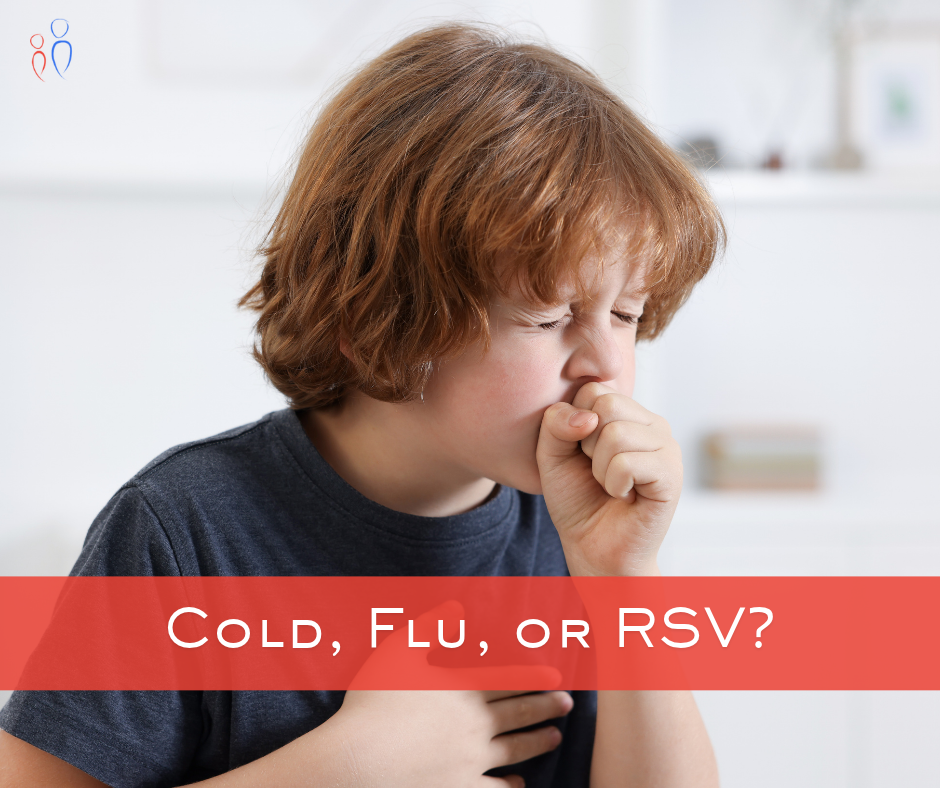
A runny nose before school. A cough that interrupts bedtime. A sudden fever that changes the entire family’s plans. For parents of young children, respiratory illnesses can bring plenty of uncertainty—especially when several viruses cause similar symptoms.
For families in Sandy Springs, East Cobb, and the Atlanta area, knowing what to watch for can make these situations easier to navigate. The most useful questions often go beyond identifying the virus: Is your child breathing comfortably? Are they drinking enough? Are they alert and interacting? Is their condition improving or getting worse?
Understanding these details helps parents recognize when supportive care may be appropriate and when a child needs medical attention.
Why respiratory illnesses can look so similar
The common cold, influenza, respiratory syncytial virus—usually called RSV—and COVID-19 can all affect a child’s respiratory system. Symptoms overlap, so a cough or fever alone cannot reliably identify the cause.
RSV often causes cold-like symptoms, but it can lead to more serious illness in infants and certain children with underlying conditions. A baby with congestion may also have difficulty feeding because breathing through a stuffy nose takes extra effort. Contact a healthcare professional if your child has trouble breathing, is not drinking enough, or has worsening symptoms.
A pediatrician considers the whole picture, including age, symptoms, medical history, examination findings, and whether testing would change treatment. Parents do not need to determine the diagnosis before calling.
Look at breathing before focusing on the cough
A loud cough can be unsettling, but how a child breathes between coughs is especially important.
Watch your child when they are calm. Are they breathing comfortably, or does every breath appear to require effort? Are the ribs pulling inward? Is your child able to speak, cry, or feed normally?
Seek immediate medical care for fast or difficult breathing, ribs pulling in with each breath, bluish lips or face, chest pain, or a child who is not alert or interacting normally while awake. Call 911 for severe breathing distress, unresponsiveness, or another life-threatening emergency.
When speaking with your pediatrician, specific observations help. “Her ribs pull inward when she breathes” provides more useful information than “Her cough sounds terrible.”
Fever needs an age-specific response
A child’s age changes how a fever should be handled.
For a baby younger than 3 months, a temperature of 100.4°F or higher requires immediate medical guidance, even if the baby otherwise appears well. Do not wait to see whether additional symptoms develop. A rectal temperature is the most accurate measurement for young infants.
For older children, consider their behavior, breathing, hydration, and other symptoms along with the temperature. Contact the pediatrician promptly if a child appears very ill, has a stiff neck, an unexplained rash, repeated vomiting, or signs of dehydration. Also call if fever lasts more than 24 hours in a child younger than 2 years or more than three days in a child age 2 or older.
Keep a written record of temperatures, how they were measured, and any medicine given. This can make a phone conversation or sick visit more productive.
Supporting comfort at home
When a child can safely recover at home, simple care can help them feel more comfortable.
Offer fluids frequently and allow plenty of rest. Saline nose drops or spray can help loosen congestion; gentle suction may help infants before feeding. For children older than 1 year, honey may soothe a cough. Never give honey to a baby younger than 12 months.
Ask your pediatrician before using over-the-counter cough and cold products, particularly in young children. Use medication only as directed for your child’s age and weight, and check labels to avoid giving the same ingredient in more than one product.
Create a manageable home routine: keep fluids nearby, write down medication times, and give caregivers the same instructions. During an illness, a clear plan is more helpful than a crowded medicine cabinet.
When flu treatment may be time-sensitive
If you suspect influenza, contacting your pediatrician early can matter.
Prescription antiviral medicines work best when started within two days of symptom onset. Some children can still benefit when treatment begins later, especially those with severe illness or a higher risk of complications.
Children younger than 5 years—particularly those younger than 2—and children with conditions such as asthma may need prompt consideration for treatment. Your pediatrician can determine whether an antiviral is appropriate. These medicines treat influenza; they do not treat every virus that causes a cough or fever.
When calling, mention when symptoms began and any underlying health conditions.
Preparing for a pediatric sick visit
Whether your family lives in Sandy Springs, East Cobb, or another Atlanta neighborhood, gathering a few details before contacting the office can help:
- Your child’s age and current symptoms.
- When symptoms started and whether they are worsening.
- The highest measured temperature.
- How much your child is drinking and urinating.
- Any changes in breathing or activity.
- Medicines already given, including doses and times.
- Relevant conditions, such as asthma.
Do not delay urgent care while collecting this information.
A practical plan for respiratory illness season
Families cannot prevent every infection, but they can prepare. Keep a working thermometer at home, review your child’s medication instructions, and know how to contact your pediatrician during and after office hours.
Ask about age-appropriate immunizations and other prevention options. Handwashing, cleaner indoor air, and staying home when sick also help reduce the spread of respiratory infections.
Sandy Springs Pediatrics encourages parents to reach out when symptoms are concerning or the next step feels unclear. For families throughout Sandy Springs, East Cobb, and Atlanta, a trusted pediatric relationship provides an important source of guidance when children are sick.