
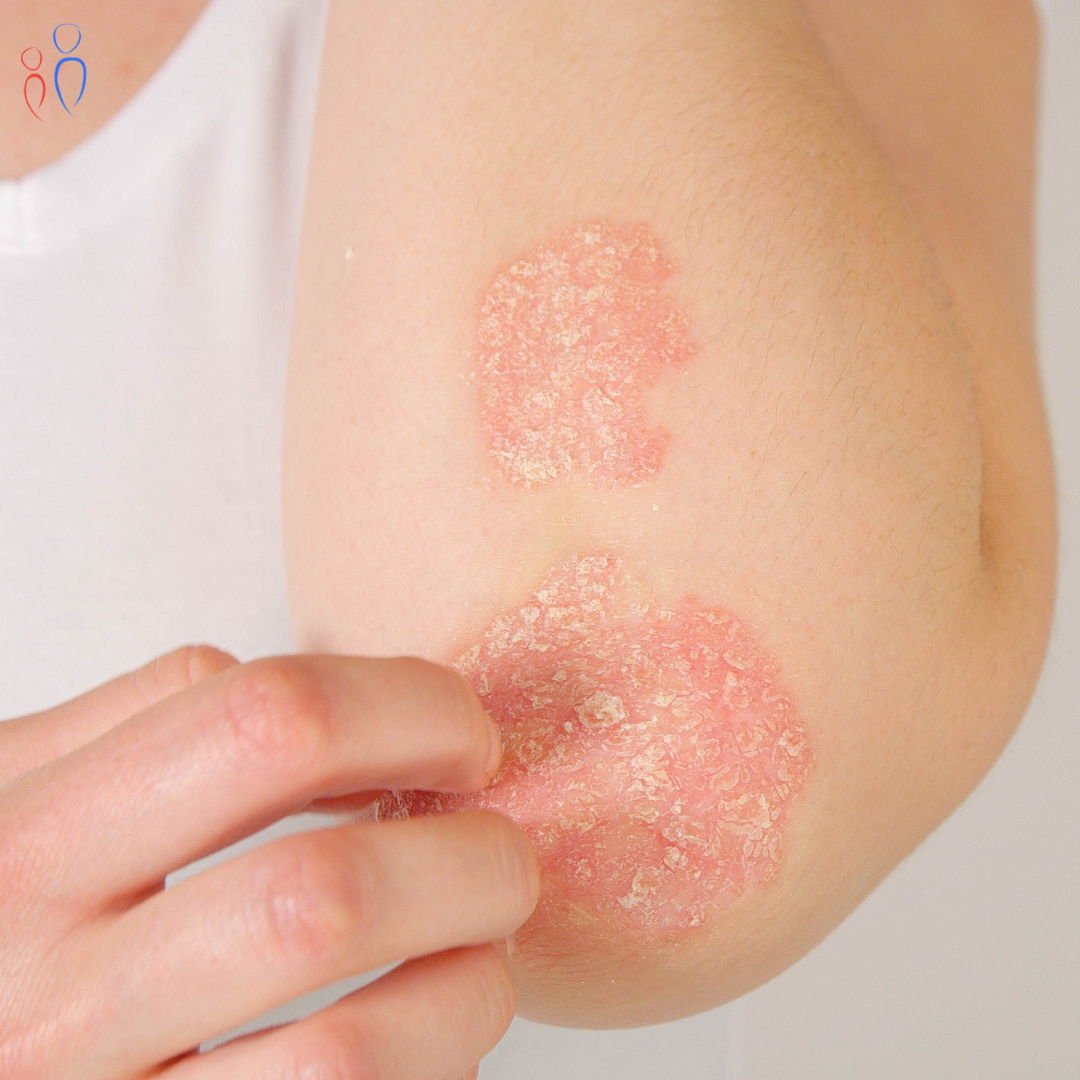
A persistent rash can affect much more than a child’s skin. Psoriasis may cause itching, discomfort and disrupted sleep, while visible patches can affect confidence, clothing choices, sports participation and social experiences.
Psoriasis Awareness Month is an opportunity to explain what psoriasis is, address common misconceptions and remind families that effective treatments are available. A child with psoriasis did not cause the condition through poor hygiene, diet or anything the family did wrong.
What is psoriasis?
Psoriasis is a chronic, immune-mediated inflammatory condition. In psoriasis, an overactive immune response causes skin cells to multiply much faster than usual. Instead of shedding gradually, the cells accumulate on the skin’s surface and form inflamed, scaly areas.
Psoriasis most commonly affects the scalp, elbows, knees and lower back, but it can occur almost anywhere. Children may also develop psoriasis around the belly button, behind the ears, in the diaper area or within skin folds.
On lighter skin, psoriasis commonly appears red or pink with silvery-white scale. On darker skin, affected areas may look purple, gray, dark brown or deeper than the surrounding skin. Scale may appear gray or white. Changes in skin color can remain after the active inflammation has improved, particularly in children with more deeply pigmented skin.
Myth: “Psoriasis is contagious.”
Fact: Psoriasis cannot be spread from one child to another.
A child cannot catch psoriasis by touching a rash, sharing clothing, swimming in the same pool or attending school with someone who has the condition. Psoriasis is not caused by bacteria, fungi or poor hygiene.
Although some infections can trigger a psoriasis flare in a person who is genetically susceptible, the psoriasis itself is not an infection.
What causes psoriasis in children?
Scientists do not know one single cause. Psoriasis develops through a combination of immune-system activity, genetics and environmental influences.
A family history can increase a child’s likelihood of developing psoriasis, but not every child with psoriasis has an affected relative. Likewise, having a parent with psoriasis does not mean that a child will necessarily develop it.
Certain events can trigger the first outbreak or cause an existing condition to flare. Potential triggers include infections, skin injuries, emotional or physical stress, cold weather and certain medications. Scratches, sunburns, insect bites and friction from clothing can sometimes cause psoriasis to develop in an injured area. This response is known as the Koebner phenomenon.
Triggers do not affect every child in the same way, and many flares occur without an identifiable cause.
Myth: “Stress causes psoriasis.”
Fact: Stress does not independently create psoriasis in a child who is not susceptible to the condition, but it can contribute to flares.
Physical illness, lack of sleep and emotional stress can influence immune activity. At the same time, living with a visible or uncomfortable skin condition can itself create stress. This can produce a cycle in which psoriasis contributes to emotional distress and distress makes symptoms more difficult to manage.
Parents should avoid suggesting that a child’s symptoms are happening because the child is not relaxed enough. Stress management may support overall well-being, but it is not a replacement for medical treatment.
What does pediatric psoriasis look like?
Plaque psoriasis is the most common form. It causes well-defined areas of inflamed skin covered by scale. In children, plaques may be thinner and less scaly than those typically seen in adults.
Guttate psoriasis causes many small, drop-shaped spots on the torso, arms or legs. It is more common in children and adolescents than in adults and may appear after an infection, particularly strep throat. Guttate psoriasis may clear and never return, but some children later develop plaque psoriasis.
Inverse psoriasis occurs within skin folds, such as the armpits, groin or beneath the breasts. These areas may appear smooth and inflamed rather than heavily scaled because moisture and friction affect their appearance.
Scalp psoriasis may resemble severe dandruff, but it often produces more sharply defined areas of scale and can extend beyond the hairline. Psoriasis may also affect the nails, causing small pits, discoloration, thickening, separation from the nail bed or crumbling.
Pustular and erythrodermic psoriasis are uncommon but potentially serious forms. Widespread skin redness, extensive peeling, fever, chills, dehydration or large areas of pus-filled bumps require urgent medical evaluation.
Myth: “Psoriasis and eczema are the same condition.”
Fact: Psoriasis and eczema are different inflammatory skin conditions, although they can sometimes look similar.
Eczema commonly causes intense itching and poorly defined areas of dry, inflamed skin. In younger children, it frequently affects the face and the outer surfaces of the arms and legs. In older children, it often appears in the bends of the elbows and knees.
Psoriasis typically causes more clearly defined areas of inflammation and scale and is common on the scalp, elbows, knees and around the belly button. However, these patterns are not absolute. A child may have psoriasis in a skin fold or eczema on an elbow, and some children may have features of both.
Ringworm, seborrheic dermatitis and other skin conditions can also resemble psoriasis. Because treatments differ, a persistent rash should be properly evaluated rather than diagnosed from photographs alone.
Myth: “Psoriasis is caused by poor hygiene.”
Fact: Psoriasis is caused by inflammation and abnormal immune activity, not unclean skin.
Scrubbing psoriasis will not remove the condition and may make it worse by irritating or injuring the skin. Gentle bathing can remove loose scale and support skin care, but aggressive exfoliation, picking and harsh soaps can increase inflammation.
Children should generally use lukewarm rather than very hot water, a gentle fragrance-free cleanser when needed and a thick moisturizer after bathing. Moisturizers do not treat the underlying immune activity, but they can reduce dryness, cracking and itching.
Can food cause or cure psoriasis?
No specific food has been proven to cause psoriasis, and no diet has been shown to cure it.
Children with psoriasis need a balanced diet that supports normal growth and development. Eliminating major food groups without a diagnosed allergy, celiac disease or another medical reason can create nutritional deficiencies and make family meals unnecessarily stressful.
Psoriasis is associated with a higher prevalence of obesity, and maintaining health-supporting routines may reduce broader health risks. This should be approached without blaming a child for their condition or suggesting that weight is the sole cause. Families can focus on regular movement, adequate sleep and balanced meals rather than restrictive diets or weight-based shame.
Any supplement or major dietary change should be discussed with the child’s pediatrician. “Natural” products can cause side effects, interact with medications or contain ingredients that have not been well studied in children.
How is psoriasis diagnosed?
There is no single blood test that confirms ordinary plaque psoriasis. A pediatrician or dermatologist can often make the diagnosis by examining the skin, scalp and nails and reviewing the child’s symptoms, family history and recent illnesses.
Occasionally, a small skin sample may be needed when the diagnosis is uncertain. A throat test may be appropriate when guttate psoriasis appears after symptoms of strep throat. Treating a confirmed infection is important, but antibiotics do not treat psoriasis itself unless an active bacterial infection is present.
How is psoriasis treated in children?
Treatment depends on the child’s age, the type and location of psoriasis, the amount of skin involved, symptom severity and the condition’s effect on daily life.
Topical medications are often used for limited psoriasis. These may include corticosteroids, vitamin D analogues or other anti-inflammatory medicines. Different areas of the body absorb medication differently, so a product prescribed for a thick plaque on the elbow may not be appropriate for the face or a skin fold.
Topical corticosteroids can be safe and effective when the correct strength is used for the appropriate area and length of time. Overuse can cause skin thinning and other side effects, while undertreatment may leave inflammation uncontrolled. Parents should follow the prescribed instructions rather than using another family member’s medication or stopping treatment solely because it contains a steroid.
Light therapy, also called phototherapy, may be considered when topical treatment is not sufficient or when larger areas are involved. Medical phototherapy delivers a controlled dose of ultraviolet light. It is not the same as using a tanning bed, which exposes the skin to uncontrolled ultraviolet radiation and increases skin-cancer risk.
Moderate or severe psoriasis may require medication that works throughout the body. Options can include oral medicines, injected biologic medications or other systemic treatments. Some biologic medications are approved for children with moderate to severe psoriasis. These treatments target specific parts of the immune response and require evaluation and monitoring by an experienced physician.
Is psoriasis curable?
There is currently no cure for psoriasis, but treatment can reduce or clear the visible disease and help control symptoms.
Children may experience periods when their skin is clear followed by flares. A treatment that works well for one child may not work as well for another, and treatment needs may change over time.
Stopping a medication abruptly or changing the plan without guidance can sometimes lead to worsening symptoms. Families should contact the prescribing physician if a treatment is difficult to use, causes side effects, is unaffordable or is not producing adequate improvement. These concerns can often be addressed by modifying the plan.
Psoriasis can affect more than the skin
Psoriasis involves inflammation that can have effects beyond visible plaques. Some children develop psoriatic arthritis, which causes joint inflammation.
Parents should report persistent joint pain, swelling, stiffness, heel pain, a swollen finger or toe, limping or difficulty moving after waking. Ordinary growing pains do not typically cause visible joint swelling or prolonged morning stiffness.
Children and adolescents with psoriasis also have higher rates of anxiety and depression than their peers. Visible skin changes, itching, disrupted sleep, treatment demands, teasing and unwanted questions can all affect emotional health.
A child who begins avoiding school, sports, swimming, friendships or clothing they previously enjoyed may need additional support. Persistent sadness, anxiety, irritability, hopelessness or comments about self-harm require prompt attention.
Helping a child cope with visible psoriasis
Parents can explain that psoriasis is a medical condition and is not contagious. Children may benefit from having a simple response ready for questions, such as, “It’s psoriasis. You can’t catch it.”
Schools, coaches and caregivers should understand any treatment needs and know that the condition cannot spread to others. If a child experiences teasing or bullying, adults should address it directly rather than expecting the child to manage it alone.
Allowing children to participate in age-appropriate treatment decisions can also help. A young child may choose between two acceptable moisturizer textures, while an older child may help select a convenient time for treatment. The medical plan should be effective, but it also needs to be realistic enough for the family to follow.
When should parents seek medical care?
A child should be evaluated for a rash that persists, repeatedly returns, covers a large area or does not improve with basic skin care. Medical guidance is also appropriate when a rash causes pain, intense itching, sleep disruption, scalp involvement, nail changes or emotional distress.
Prompt evaluation is important if the child develops joint swelling or prolonged stiffness. Urgent care is needed for widespread redness, extensive skin peeling, fever, chills, dehydration, a rapid heartbeat or large areas of pus-filled bumps.
Supporting children without blame
Psoriasis is not a sign that a child is unhealthy, unclean or failing to manage stress correctly. It is a chronic inflammatory condition influenced by genetics, immune activity and environmental factors.
The goal of treatment is not simply cosmetic. Effective care can relieve itching and pain, protect sleep, support participation in school and activities, reduce inflammation and improve quality of life.
With an accurate diagnosis, an individualized treatment plan and support for emotional as well as physical health, most children with psoriasis can participate fully in the activities that matter to them. Our pediatric care team is here for you and your family whenever needed. (404) 252-4611