
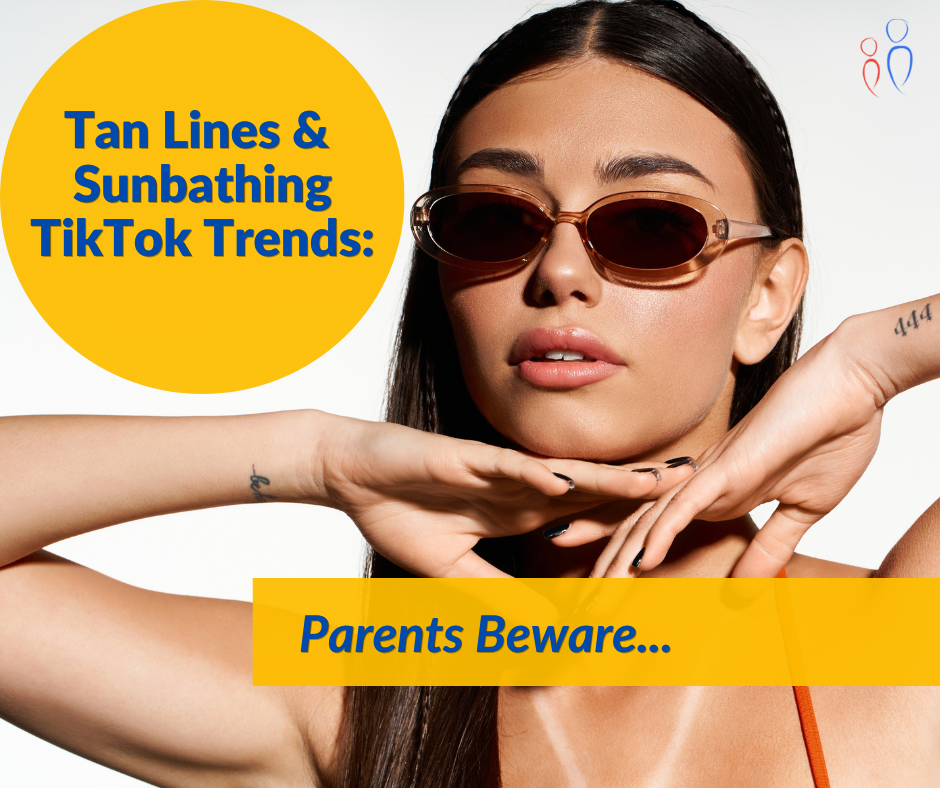
A recent social media trend promoting intentional tanning and pronounced tan lines has prompted growing concern among pediatric and dermatology experts. Videos with aspiring influencers are circulating online, encouraging prolonged sun exposure – tanning without sun protection. For many teenagers, these trends may appear harmless or aesthetic, but medical experts continue to emphasize that tanning is not a sign of healthy skin – it is the body’s response to ultraviolet damage.
Because adolescence is a period when lifelong health habits and self-image are still developing, this trend offers parents an important opportunity to discuss skin health, sun safety, and how social media may influence decisions surrounding appearance and wellness.
These conversations are not always easy.
Many parents grew up during decades when tanning was often associated with beauty, vacations, or looking healthy. Dark tans and visible tan lines were widely sought after, and for many adults, sunbathing or tanning culture was considered normal. Parents may remember spending entire afternoons outdoors trying to achieve a darker tan with little awareness of the long-term consequences.
That perspective matters.
The goal of today’s conversations is not to criticize past choices or shame teenagers for participating in trends that may feel appealing or socially relevant. Rather, the difference now is the amount of research available about ultraviolet exposure and what repeated sun damage may mean for long-term health.
One of the most important facts for teenagers to understand is that tanning itself represents skin injury.
When skin is exposed to ultraviolet radiation from the sun or tanning devices, the body produces additional melanin as an attempt to protect damaged skin cells. The darker appearance people recognize as a tan is not evidence that skin has become healthier or stronger. Instead, it reflects the skin responding to ultraviolet damage that has already occurred.
This distinction can be surprising because tanning is often associated with wellness, attractiveness, or spending time outdoors. Social media images may reinforce the idea that bronzed skin or sharp tan lines signal health or confidence, yet dermatology and cancer prevention organizations continue to emphasize that tanning is a biological response to injury.
Teenagers may not always connect tanning with health concerns because the effects of ultraviolet exposure are often delayed.
Unlike a scrape or bruise, sun damage accumulates gradually. Skin remembers exposure over time, and repeated ultraviolet radiation may contribute to changes that are not visible for years or even decades.
This is particularly important during adolescence, when many young people spend increased time outdoors at pools, sports practices, beaches, camps, and summer activities. Habits developed during these years may shape future behaviors surrounding sun protection and self-care.
Research continues to show that blistering sunburns during childhood and adolescence are associated with increased melanoma risk later in life. Melanoma is less common than some other skin cancers but remains the most serious form because of its ability to spread. Ultraviolet exposure also contributes to more common skin cancers, including basal cell and squamous cell carcinomas, as well as premature skin aging, uneven pigmentation, loss of elasticity, and changes in skin texture over time.
Many of these long-term changes begin developing long before they become visible.
Teenagers may understandably focus more on immediate appearance than future health outcomes. Developmentally, this is normal. Adolescence is a stage where peer influence, identity, and self-image carry significant weight. Social media may amplify those pressures by presenting tanning trends without providing accurate medical context or discussing potential consequences.
This does not mean parents should dismiss trends or assume teenagers are making careless choices.
In many cases, teens are responding to beauty standards and social influence in ways that feel familiar across generations. What is different today is how quickly trends spread and how frequently adolescents encounter appearance-driven messaging online.
Several misconceptions continue to circulate about tanning and sun exposure.
One common belief is that a “base tan” protects the skin from damage. Medical organizations consistently explain that a base tan provides only minimal protection and does not prevent ultraviolet-related DNA damage.
Another misunderstanding involves cloudy weather. Many teens assume sunscreen is unnecessary on overcast days, yet ultraviolet rays can penetrate cloud cover and continue reaching the skin.
There is also confusion surrounding skin tone and risk. While melanin provides some natural protection against sunburn, individuals of all skin tones may experience sun damage and develop skin cancer. Because of this, sun protection remains important for everyone.
Parents often ask how to approach these conversations without creating conflict.
Health experts frequently recommend beginning with curiosity rather than correction. Teenagers may be more willing to engage when parents acknowledge what they are seeing online and recognize that appearance trends can feel meaningful.
Questions such as, “What are people saying about tanning?” or “Have you seen these tan line videos?” may create space for discussion without immediately putting teens on the defensive.
Acknowledging generational experiences may also help.
Many teenagers respond positively when parents are honest and relatable. Saying, “We understand why this looks appealing—many of us chased tans too—but we also know much more now about what sun damage does long term,” may feel more collaborative than simply issuing warnings.
The goal is not fear, guilt, or criticism.
Sunlight and outdoor activity remain important parts of childhood and adolescence, supporting physical activity, social connection, and emotional wellness. Sun safety is not about avoiding the outdoors or making summer less enjoyable. Instead, it is about helping young people understand that protecting their skin is part of protecting their overall health.
Current medical guidance continues to recommend broad-spectrum sunscreen with SPF 30 or higher, reapplication during extended outdoor activity, and additional protection through hats, sunglasses, and shade when possible. Many families find that teens are more likely to use sunscreen consistently when allowed to choose products they prefer, particularly lightweight or non-greasy options designed for sports or acne-prone skin.
Another topic families may encounter online involves vitamin D and sunscreen. Medical organizations continue to state that sunscreen use does not typically cause vitamin D deficiency for most individuals and that vitamin D can also be obtained through food and supplements when appropriate. Intentional tanning is not recommended as a strategy for maintaining vitamin D levels.
Ultimately, this conversation extends beyond sunscreen alone.
It is about helping teenagers learn how to evaluate trends, understand how their bodies respond to environmental exposure, and make informed decisions about health and appearance. Social media trends will continue to evolve, but accurate information and open communication remain valuable tools for families.
At Sandy Springs Pediatrics, we understand that navigating social media influence and teen health conversations can sometimes feel challenging. Our team is committed to supporting families with evidence-based guidance and thoughtful discussions that help children and adolescents make informed choices about their health, safety, and long-term well-being