
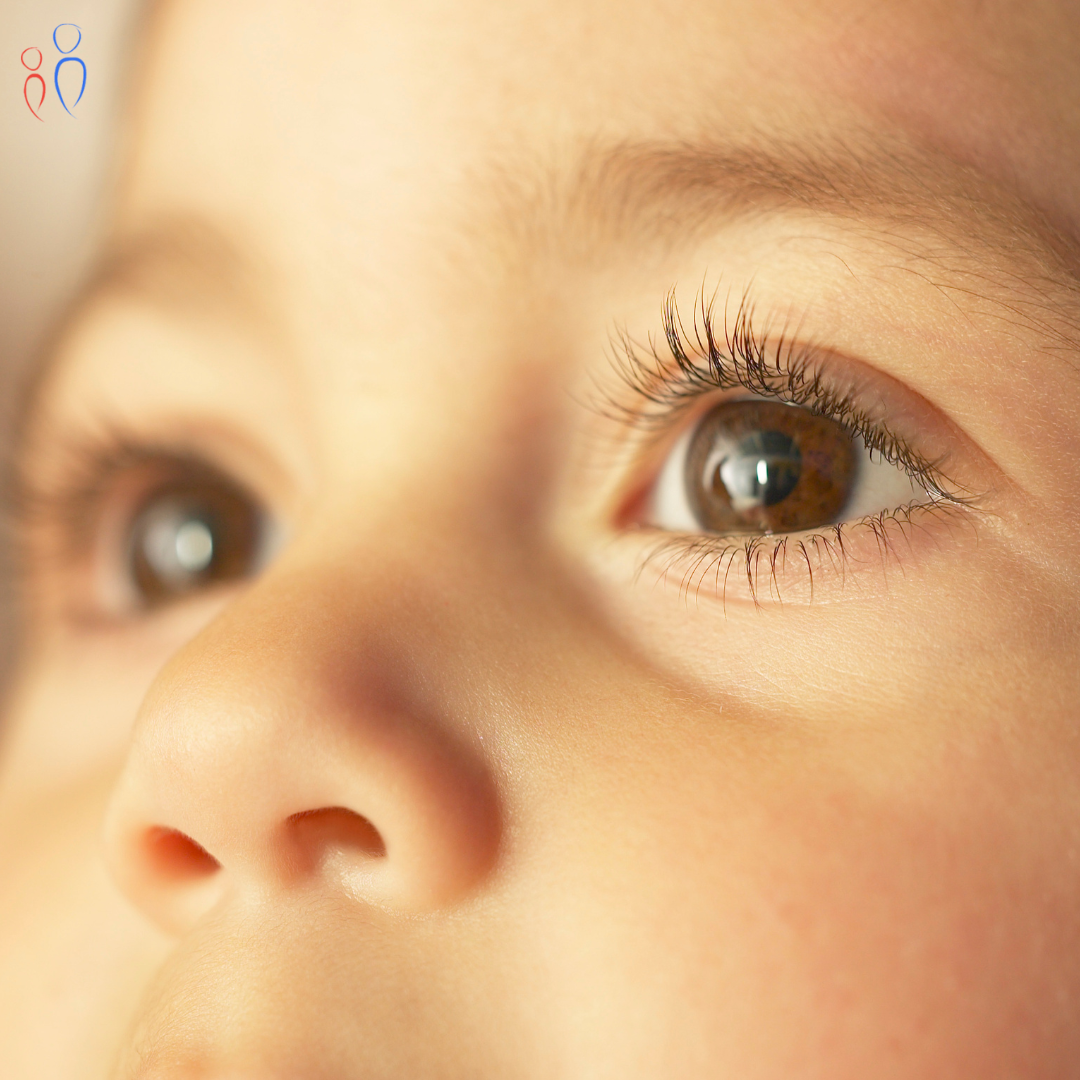
Children do not always know when their vision is different from what it should be. A child who has always seen the world a certain way may assume that everyone sees it that way. Some vision conditions also affect only one eye, allowing the stronger eye to compensate without producing an obvious problem.
Children’s Eye Health and Safety Month is an opportunity to help families understand how vision develops, why early screening matters and which everyday precautions can help prevent avoidable eye injuries.
Why children’s vision deserves attention
Clear vision supports reading, classroom participation, coordination, sports and many everyday activities. However, vision problems are not always visible to parents or teachers.
Refractive errors such as nearsightedness, farsightedness and astigmatism can make images appear blurry. Strabismus causes the eyes to point in different directions. Amblyopia develops when the brain does not receive a clear or properly aligned image from one or both eyes during early childhood.
When these conditions are identified early, treatment may help the visual system develop normally. If certain problems remain untreated while vision is developing, the resulting impairment can become permanent.
Myth: “My child would tell me if they could not see clearly.”
Fact: Many children do not recognize or report a vision problem.
A young child may not know what clear vision is supposed to look like. If only one eye is affected, the child may function normally by relying on the stronger eye. Even children with significant refractive errors may adapt by sitting closer, squinting or avoiding visually demanding activities.
Possible signs of a vision problem include frequent squinting, blinking or eye rubbing; holding books or devices unusually close; sitting very close to the television or classroom board; closing or covering one eye; tilting the head to see; experiencing headaches during reading or close work; losing one’s place while reading; avoiding close-up activities; having difficulty recognizing people or objects at a distance; or having an eye that consistently turns inward or outward.
Some children have no noticeable symptoms. That is why routine vision screening remains important even when a child appears to see well.
Myth: “A vision screening is the same as a complete eye examination.”
Fact: Screening is designed to identify children who may need further evaluation; it does not diagnose every eye condition.
Pediatric vision assessments begin in infancy. Depending on a child’s age, the pediatrician may examine the pupils and red reflex, observe eye alignment and tracking, use an instrument-based screening device or test visual acuity with an eye chart.
The American Association for Pediatric Ophthalmology and Strabismus recommends age-appropriate assessments beginning during infancy. Instrument-based screening may be used in younger children, while direct visual-acuity testing becomes increasingly useful as children are able to participate reliably. Screening is generally repeated every one to two years after age 5.
A child who does not pass a screening should receive the recommended follow-up examination. A failed screening does not necessarily mean that a serious condition is present, but it should not be ignored. Likewise, a child with symptoms, an abnormal eye appearance or a strong family history may need an eye examination even after passing a screening.
Myth: “Amblyopia simply means that one eye turns.”
Fact: Amblyopia is reduced vision caused by abnormal visual development. The affected eye may look completely normal.
Sometimes called “lazy eye,” amblyopia can develop when one eye is more nearsighted, farsighted or astigmatic than the other. It can also result from strabismus, a cataract or another condition that prevents a clear image from reaching the brain.
When one eye consistently provides a clearer image, the developing brain may begin to rely on that eye and suppress information from the other. Treatment may include glasses, patching the stronger eye, atropine eye drops or treatment of an underlying eye condition. The appropriate treatment depends on the cause.
Because the brain’s visual pathways develop during childhood, early detection generally provides the greatest opportunity for improvement. Amblyopia cannot always be identified simply by looking at a child’s eyes.
Myth: “Wearing glasses will make a child’s eyes weaker.”
Fact: Correctly prescribed glasses do not weaken the eyes.
Glasses focus light properly so that the brain receives a clearer image. In children with certain refractive errors, wearing glasses is part of preventing or treating amblyopia.
A prescription may change as the eyes grow, but this does not mean that glasses caused the change. Some children eventually need a weaker prescription, while others continue to need glasses or require stronger correction over time. The pattern depends on the child’s eye growth and underlying condition.
Myth: “Screens permanently damage children’s eyes.”
Fact: Current evidence does not show that ordinary screen use permanently damages the developing eye, but prolonged close work can cause temporary symptoms and may displace healthier activities.
Children may blink less frequently while concentrating on a screen. This can contribute to temporary dryness, irritation, blurred vision, headaches and eye fatigue. Screen use near bedtime can also interfere with sleep.
Regular breaks can reduce discomfort. One practical approach is the 20-20-20 rule: approximately every 20 minutes, look at something at least 20 feet away for 20 seconds. Screens should be positioned at a comfortable distance, glare should be reduced and children should use any prescribed glasses.
Time outdoors is also important. Research has associated more outdoor time with a lower likelihood of developing myopia, although outdoor activity cannot guarantee that a child will not become nearsighted. Genetics also play an important role.
What parents should know about nearsightedness
Myopia, or nearsightedness, means that close objects appear clearer than distant ones. It commonly begins during school-age years and may progress as a child grows.
Signs can include squinting, difficulty seeing the classroom board, sitting close to screens or trouble recognizing objects at a distance. Children with one or two nearsighted parents have a higher likelihood of developing myopia, but it can occur without a family history.
Glasses or contact lenses correct blurred vision. For some children with progressing myopia, an eye doctor may discuss treatments intended to slow progression. These can include specially designed glasses or contact lenses and low-dose atropine eye drops. Treatment is individualized, and children receiving myopia-control treatment require regular monitoring.
Eye alignment: what is normal?
A newborn’s eyes may occasionally appear misaligned during the first few months of life. Persistent eye crossing or drifting, however, should be evaluated. Any constant eye turn is concerning, and an intermittent turn that continues beyond early infancy should be discussed with the child’s pediatrician.
Parents should also mention an eye that does not track normally, persistent head tilting, unusual sensitivity to light, chronic tearing or a drooping eyelid.
The importance of eye safety
Many childhood eye injuries are preventable. Eye protection is particularly important during sports and activities involving projectiles, chemicals, tools or flying debris.
Regular prescription glasses, sunglasses and contact lenses are not substitutes for protective sports eyewear. Appropriate sports protectors should use impact-resistant polycarbonate lenses and be designed for the specific activity. Children who have good vision in only one eye, or who have a history of eye surgery or significant eye trauma, require particular protection.
At home, parents can reduce risk by keeping cleaning products, detergent packets and other chemicals out of reach; supervising children around scissors, tools, rubber bands and bungee cords; avoiding toys that shoot sharp, rigid or high-speed projectiles; and teaching children not to run while carrying pointed objects. Children should use appropriate protective eyewear during yardwork, home projects and science experiments. Families should also select age-appropriate toys, follow manufacturer safety instructions and keep children away from fireworks.
What should parents do after an eye injury?
The appropriate response depends on the type of injury.
For a chemical splash, begin rinsing the eye immediately with clean, lukewarm water and continue flushing while seeking guidance from Poison Control or medical professionals. Do not delay rinsing to search for a specific solution.
For a cut, puncture or object embedded in the eye, do not apply pressure, attempt to remove the object or place medication in the eye. Protect the area without pressing on it and seek emergency care.
After a blow to the eye, apply a cold compress gently around the area without pressing on the eyeball. A child should be medically evaluated if there is significant pain, a change in vision, increasing swelling, blood inside the eye or difficulty moving the eye.
Do not allow a child to rub an injured eye. When there is uncertainty about the seriousness of an injury, contact the child’s pediatrician or seek urgent medical care.
Eye symptoms that need prompt evaluation
Parents should seek prompt medical guidance if a child develops sudden vision loss or a significant change in vision, severe eye pain, new double vision, unequal pupils following an injury or an inability to open or move an eye normally. Chemical exposures, penetrating injuries and visible blood inside the eye also require immediate medical attention.
A persistently red and painful eye, particularly when accompanied by sensitivity to light, should be evaluated. Parents should also seek prompt care for a new eye turn, abnormal eye movement or a white, gray or absent reflection in the pupil.
A white pupil or white reflection in flash photographs can have several causes, including rare but serious eye disease. It warrants prompt medical evaluation rather than observation at home.
Supporting healthy vision at every age
Parents do not need to test their children’s eyesight at home or wait for a child to complain. The most useful steps are to keep recommended well-child visits and vision screenings, complete a comprehensive eye examination when a child is referred and make sure prescribed glasses are worn as directed.
Families can also support children’s eye health by encouraging regular outdoor play, building breaks into extended periods of close work and providing activity-appropriate protective eyewear. Changes in vision, eye alignment or eye appearance should be reported promptly. Parents should also tell the pediatrician about any family history of childhood eye disease, severe refractive error or retinoblastoma.
Healthy vision is not only about seeing letters on a chart. It also depends on how the eyes focus, align, move and work together—and how the brain processes the images they provide. Early screening, appropriate follow-up and practical safety measures can protect a child’s sight throughout the years when vision is still developing.
To schedule an appointment with one of our Board-Certified pediatricians, call our office at (404) 252-4611 or conveniently request a visit via our ‘Contact Us’ form at the bottom of our homepage.