
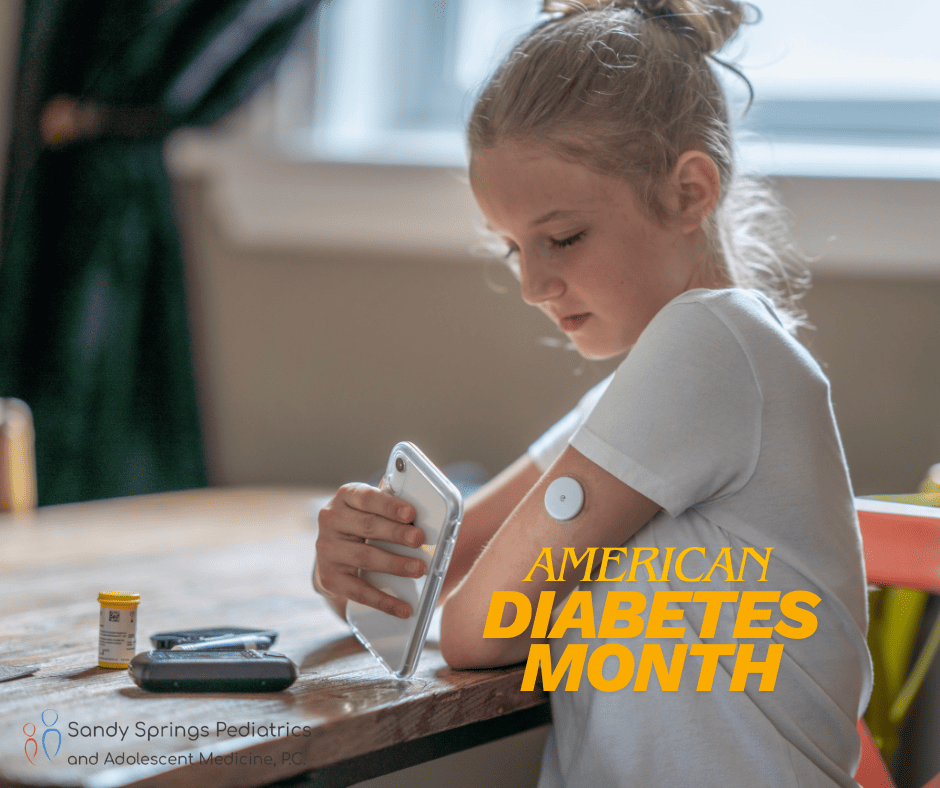
November recognizes two important health observances that matter deeply in pediatrics: American Diabetes Month and National Family Health History Day. While diabetes is often considered an adult condition, both type 1 and type 2 diabetes affect children—and rates have increased over the past two decades. For parents, November is an opportunity to understand risk factors, early warning signs, and the critical role your pediatrician plays in early detection and long-term health.
Childhood diabetes appears in two primary forms. Type 1 diabetes is an autoimmune condition where the child’s pancreas stops making insulin. It typically develops suddenly and is not related to diet or weight. Type 2 diabetes, however, arises from insulin resistance and used to be rare in children, but now occurs more frequently due to higher rates of childhood obesity, sedentary lifestyle, and family history. Both types require lifelong management and benefit greatly from early diagnosis.
Family health history plays a powerful role. A child with a parent or sibling who has type 2 diabetes has a significantly higher chance of developing insulin resistance. Even in type 1 diabetes, certain genetic markers increase susceptibility, though environmental factors also contribute. National Family Health History Day, recognized on Thanksgiving, encourages families to share medical information that helps pediatricians determine which children may need earlier or more frequent screening.
Parents should be aware of early signs of diabetes, especially if there is a family history. Symptoms include extreme thirst, frequent urination (especially bedwetting in a previously dry child), increased hunger, unexplained weight loss, fatigue, stomach pain, and blurry vision. In type 1 diabetes, symptoms may escalate rapidly and can progress to diabetic ketoacidosis, a medical emergency. Parents should call their pediatrician immediately if they see persistent thirst, vomiting, fast breathing, or sudden weight loss.
Pediatricians use blood tests to check glucose levels and A1c values. For high-risk children, screening can begin as early as age 10—or earlier if obesity or acanthosis nigricans (dark skin patches on the neck or underarms) is present. If diabetes is diagnosed, pediatricians coordinate care with pediatric endocrinologists, dietitians, and diabetes educators. Type 1 diabetes requires insulin and careful monitoring, while type 2 diabetes may improve significantly with nutrition changes, increased activity, weight stabilization, and sometimes medication.
Prevention also matters. A balanced diet, daily activity, adequate sleep, and age-appropriate weight maintenance reduce risk for type 2 diabetes. Even in children with genetic predisposition, healthy habits can delay or prevent early onset. Pediatricians guide families through realistic lifestyle changes tailored to a child’s age and developmental stage.
American Diabetes Month and Family Health History Day reinforce a crucial message: early detection, routine checkups, and honest conversations about family history empower pediatricians to protect a child’s long-term metabolic health. When parents and pediatricians work together, children with risk factors can be monitored closely, supported effectively, and set on a path to lifelong wellness.