
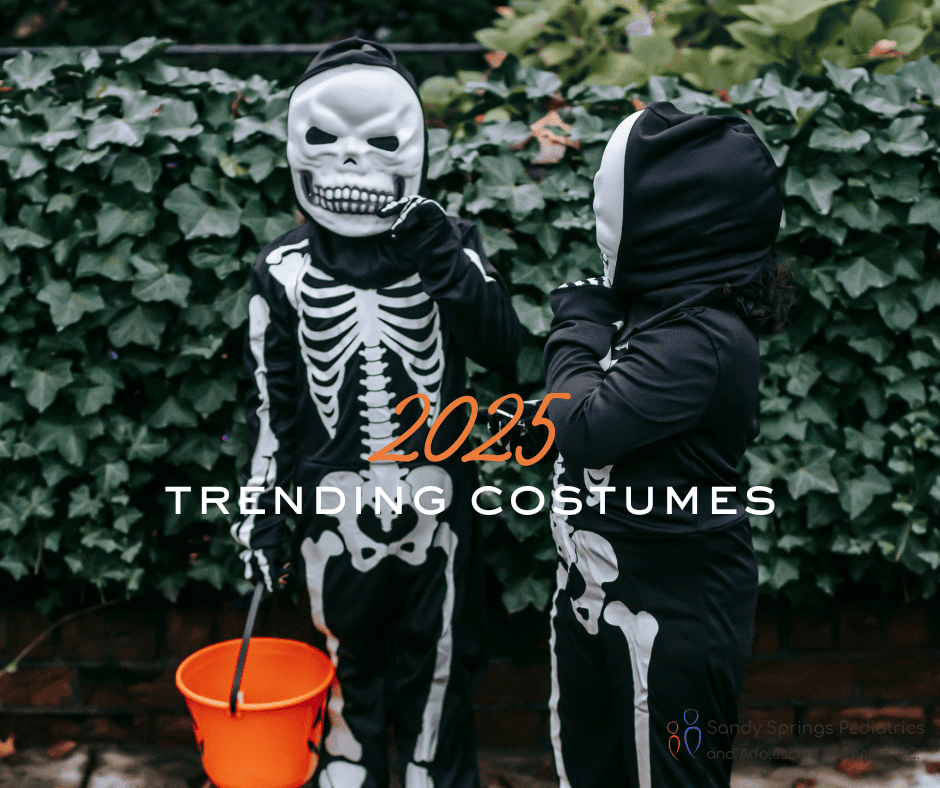
Halloween is around the corner, and that means one big question for parents: What should the kids wear this year? Whether you’re costume shopping or crafting something DIY, trends are shifting fast—thanks to movies, pop culture, and creative social media inspiration.
At Sandy Springs Pediatrics, we know parents want kids to have fun, express themselves, and stay appropriate and safe. Here’s a guide to this year’s most popular costumes for all ages, plus expert advice from child psychologists and therapists on how to handle costume choices that might push boundaries.
This Year’s Most Popular Halloween Costumes for Kids For Preschool & Elementary Ages
Younger kids are leaning toward colorful, comfort-first, and recognizable characters this year. Some of the biggest trends include:
- Animated favorites like Inside Out 2’s new characters (especially “Anxiety”)
- Classic creatures such as friendly ghosts, unicorns, pumpkins, and animals
- Whimsical treats like cotton candy, cupcakes, and glow-in-the-dark stars
- Storybook heroes from timeless tales—princesses, pirates, or fairy-tale animals
For Tweens
Kids in the 9–12 range want to feel independent—but still playful. Top costumes include:
- Minecraft or Roblox characters, especially the new Minecraft Movie Creeper look
- Pop singers and influencers, often paired with sequins, microphones, or LED accessories
- Superheroes and villains, like Harley Quinn, Spider-Man, or anime-inspired heroes
- Creative DIY mashups (think “space cowgirl” or “disco skeleton”)
For Teens
Older kids are blending creativity, fandom, and humor. Top picks this year:
- Characters from Wicked—Elphaba and Glinda are trending with the movie’s release
- Video game icons like Fortnite skins or Pokémon trainers
- Retro nostalgia—’80s and ’90s outfits inspired by shows like Stranger Things or vintage Disney
- Funny or ironic costumes, such as puns (“Ceiling Fan” with pom-poms) or low-effort trends seen on TikTok
When Kids Choose Costumes That Cross the Line
Every year, some parents face the awkward situation of their child wanting to wear something that feels too grown-up, too scary, or even offensive. Pediatric therapists say this is a common developmental stage—especially for tweens and teens exploring identity and self-expression.
Here’s how to handle it with grace and empathy:
1. Ask What They Like About the Costume
Child psychologists recommend starting with curiosity, not correction. Try:
“Tell me what you like about that costume.”
This helps uncover whether your child likes the character’s traits (bravery, humor, creativity) or simply the attention it brings. Once you understand the motivation, it’s easier to find a compromise.
2. Set Boundaries Early and Clearly
Experts agree that clear boundaries prevent disappointment later. Discuss what your family considers appropriate ahead of time—before you shop.
“Let’s find something that makes you feel confident and still fits our family’s values.”
3. Talk About Respect and Representation
If your child wants a costume that mimics another culture, race, or tradition, it’s important to explain why that can be hurtful.
“We don’t wear something that belongs to someone else’s culture as a costume—it’s not pretend for them.”
Teaching cultural sensitivity helps children develop empathy and awareness.
4. Offer Collaborative Solutions
Rather than saying “no,” guide your child to adapt their idea in a creative way.
- Add leggings or layers to make a costume more age-appropriate.
- Choose accessories that keep the spirit of the idea without the controversy.
- Reimagine the character—turn something scary or mature into a funny, heroic, or silly version.
5. Keep the Focus on Fun and Self-Expression
Remind your child that Halloween is about imagination and joy—not shock value. The goal is to feel good, stay safe, and make memories, not to impress or provoke.
Practical Tips for Parents
- Try on costumes ahead of time to check comfort, mobility, and weather readiness.
- Avoid accessories that look too realistic as weapons.
- Reflective tape or glow sticks improve visibility for trick-or-treating.
- Encourage originality—kids often love DIY touches like painted sneakers, glitter hair, or handmade masks.
- Praise creativity, not perfection.
A Therapist’s Takeaway
“Halloween can be a mirror into how kids see themselves,” one child therapist notes. “Use it as a window to understand what they value, what they’re drawn to, and what makes them feel brave or admired. When handled thoughtfully, even tricky costume conversations can strengthen connection between parent and child.”
At Sandy Springs Pediatrics, we love seeing our patients’ creativity and confidence shine this time of year. Whether your child goes as a hero, a ghost, or a galaxy, remember: what matters most is that they feel safe, respected, and celebrated for who they are.
If you ever have questions about your child’s behavior, emotional regulation, or peer pressures around trends, our team is here to help guide your family with compassion and expertise.
👻 From all of us at Sandy Springs Pediatrics—have a safe, fun, and imaginative Halloween!