
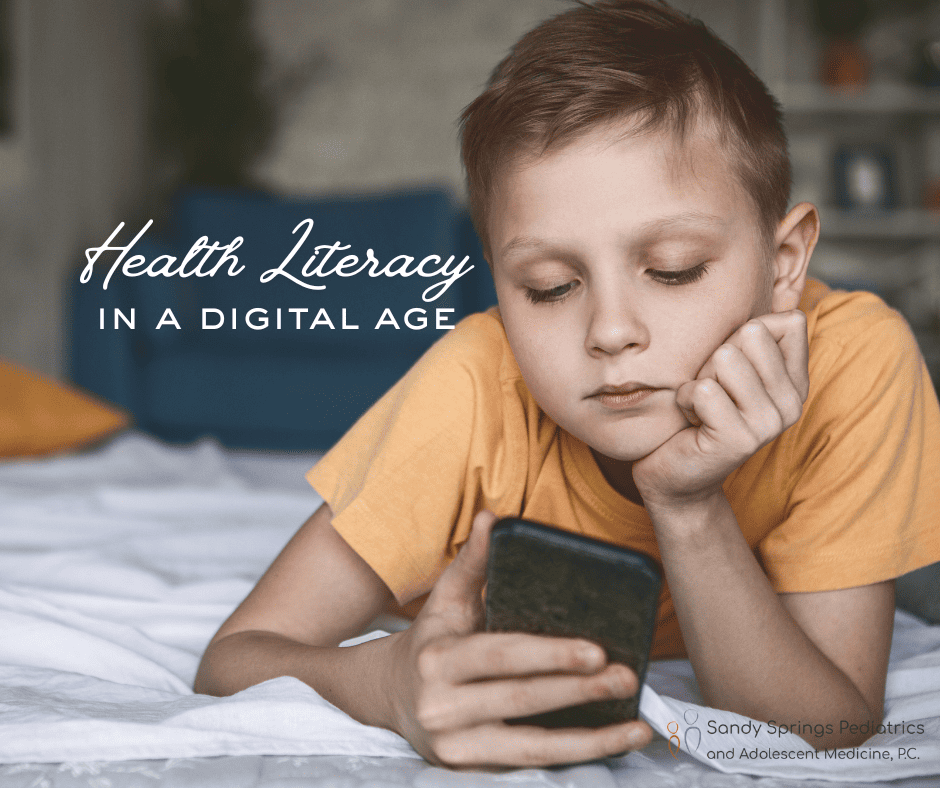
In today’s world, parents are bombarded with information about children’s health—from social media posts and podcasts to well-meaning advice in parenting groups. Unfortunately, not all information is accurate or evidence-based. That’s why October’s Health Literacy Month is such an important reminder: understanding how to find, evaluate, and use health information is one of the most powerful ways to protect your family’s well-being.
At Sandy Springs Pediatrics, we believe that health literacy starts with confidence—the confidence to ask questions, read beyond headlines, and make informed decisions for your child’s care.
What Is Health Literacy?
According to the Centers for Disease Control and Prevention (CDC), health literacy is the ability to find, understand, and use information and services to make health-related decisions.
For parents, this means being able to:
- Understand what your child’s symptoms or diagnoses mean
- Interpret medication instructions or vaccination schedules
- Ask clear questions during pediatric visits
- Identify reliable versus misleading online information
Health literacy is not about intelligence—it’s about access, clarity, and empowerment.
Why Health Literacy Matters for Families
Low health literacy can lead to confusion about medications, delays in care, and unnecessary anxiety. A parent might misinterpret a dosage label or fall for online “miracle cures” promoted by influencers.
In pediatrics, this challenge is magnified because parents are making decisions not just for themselves—but for children at every developmental stage.
Improving health literacy means parents feel more confident in:
- Making decisions during illness: Knowing when to call the pediatrician versus when to monitor at home.
- Understanding prevention: Recognizing the importance of vaccines, screenings, and annual checkups.
- Teaching children self-care: Helping older kids understand nutrition, sleep hygiene, and emotional health.
Health Literacy for Every Age For Parents of Infants & Toddlers
Focus on understanding milestones, vaccines, and nutrition. Avoid internet advice that promotes restrictive feeding, untested supplements, or anti-vaccine misinformation.
Best approach: Rely on your pediatrician for growth charts, developmental guidance, and age-appropriate recommendations.
For Parents of School-Age Children
Children start asking questions—“Why do I need shots?” “Why do I get sick?”—and this is a great time to teach basic body awareness and healthy habits.
Tip: Use clear, honest language about germs, rest, and hygiene. Show children how doctors help us stay healthy, not just fix us when we’re sick.
For Parents of Teens
Teenagers are exposed to an overwhelming amount of online “health” content. Many social platforms spread misinformation about body image, diet culture, and mental health.
Tip: Encourage your teen to verify claims from reliable medical sources. Ask them, “Where did you find that?” and review articles together from reputable organizations like the CDC, American Academy of Pediatrics (AAP), or Mayo Clinic.
How to Identify Reliable Health Information
Pediatricians and psychologists recommend these four “C”s when evaluating information:
- 1. Check the Source – Is it from a medical institution, government agency, or board-certified provider? (.gov, .edu, and .org sites are generally more trustworthy.)
- 2. Confirm the Credentials – Who is giving the advice? Influencers and “wellness coaches” often lack clinical training.
- 3. Compare Across Multiple Sources – Look for consistency among reputable organizations.
- 4. Consult Your Pediatrician – Before changing a child’s diet, starting supplements, or skipping vaccinations, confirm with a medical professional.
Remember: a single viral post is not a medical consensus.
How Pediatricians Help Improve Health Literacy
At Sandy Springs Pediatrics, our team takes the time to explain your child’s care in plain language. We encourage parents to ask questions and take notes during visits.
If something is confusing, please ask us to rephrase it—we’re here to ensure you feel informed, not rushed.
You can also:
- Bring a list of questions to appointments.
- Request printed summaries of care plans.
- Ask for resources in your preferred language, if needed.
Health literacy grows stronger every time you speak up and seek understanding.
Trusted Health Literacy Resources for Parents
Here are a few trusted, evidence-based sources for parents in Georgia and beyond:
National Resources
- HealthyChildren.org (AAP) – The American Academy of Pediatrics’ parent-friendly website with articles on every stage of child development.
👉 www.healthychildren.org - CDC Parents Portal – Up-to-date, fact-checked information on children’s vaccines, nutrition, and developmental milestones.
👉 www.cdc.gov/parents - MedlinePlus (National Library of Medicine) – A gold standard for understanding medical conditions in easy-to-read language.
👉 medlineplus.gov - KidsHealth.org – Written for parents, kids, and teens—trusted by pediatric hospitals nationwide.
👉 www.kidshealth.org
Georgia & Atlanta-Area Resources
- Georgia Department of Public Health (DPH) – State vaccine schedules, local clinics, and family health programs.
👉 dph.georgia.gov - Children’s Healthcare of Atlanta – Strong4Life – Trusted pediatric wellness and mental health information for families in metro Atlanta.
👉 strong4life.com - Georgia Healthy Family Alliance – Health education programs promoting preventive care and community health literacy.
👉 www.georgiahealthyfamilyalliance.org
Raising Health-Literate Kids
Model curiosity at home—show your child how you verify information, ask questions during doctor visits, and value expert advice. Encourage older kids to use critical thinking:
“Let’s look that up together.”
“Does this source sound trustworthy?”
By teaching these habits, you’re raising the next generation of informed, confident, and empowered health consumers. At Sandy Springs Pediatrics, we’re here not only to care for your child’s health but also to equip your family with clarity, confidence, and credible information.
If you ever come across medical advice online that leaves you uncertain—bring it to your next visit. We’ll review it together, answer your questions, and make sure your child’s care plan is based on facts, not fads.
Because informed parents make healthy families—and health literacy is one of the greatest gifts we can pass on to our children.