
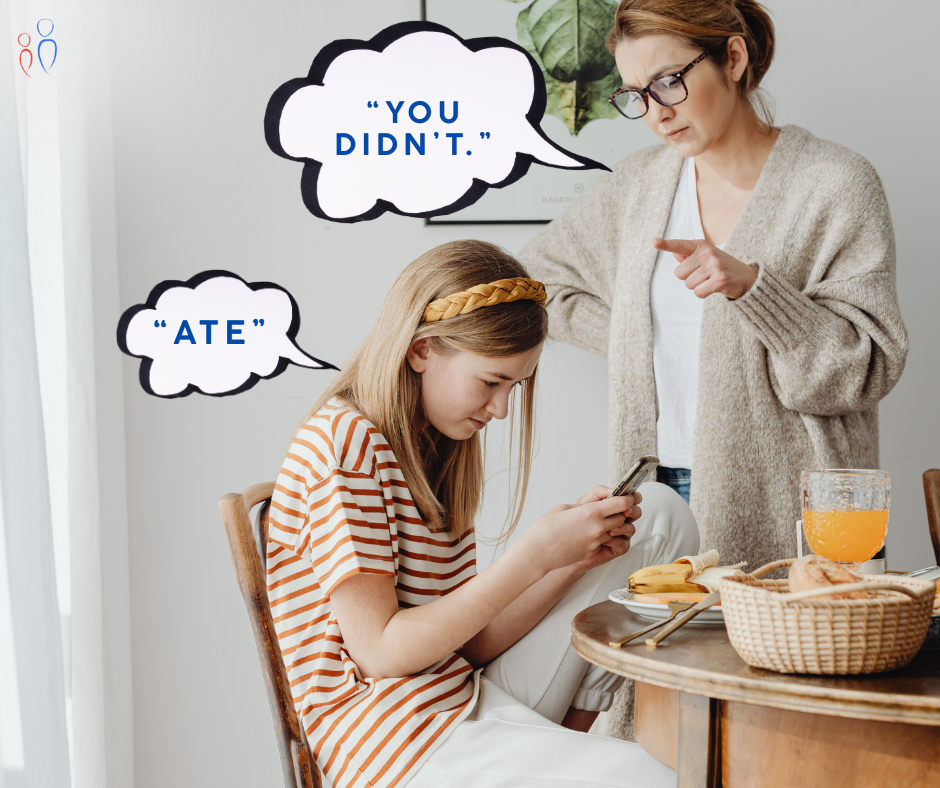
Every generation of children develops language that makes adults pause. Previous generations had “groovy,” “rad,”, “wicked”, “talk to the hand” and “all that.” Today’s children have “rizz,” “aura,” “cooked” and the almost entirely unexplainable “6-7.”
The difference is not that children suddenly use more slang. It is that social media allows new expressions to travel much faster. A phrase can begin in a song, livestream, video game or short-form video and appear in schools across the country within days. Some expressions remain popular for years, while others disappear almost as quickly as they arrived.
For parents, understanding tween and teen slang is not about memorizing a dictionary or attempting to sound like their children. It is about remaining curious about the world in which children are communicating.
Sandy Springs Pediatrics created this guide to help parents understand some of the language currently being used by school-age children, tweens and teenagers—and to explain what that language can tell us about growing up online.
Why Children Create Their Own Language
Slang helps young people build social connections and establish a shared identity. Understanding an inside joke or knowing how to use a phrase correctly can signal that someone belongs to a particular friend group, generation or online community.
This is not a new developmental phenomenon. As children become more independent, language offers a relatively harmless way to create some separation from adults. What is new is the number of places from which that language now comes.
Children may pick up a phrase from classmates without ever seeing the original video. They may also repeat words without knowing their origins or full meanings. This helps explain why a third grader, middle-school student and high-school student may use the same term in completely different ways.
Meanings also change over time. Many expressions that become popular online originated earlier in Black communities, African American Vernacular English, LGBTQ+ communities, gaming spaces or music culture. Once a term enters mainstream use, its meaning may broaden, become exaggerated or lose much of its original context.
When Something Is Good, It “Ate”
Much of today’s slang simply offers new ways to express approval.
If a child says someone “ate” or “left no crumbs,” it means the person performed or looked exceptionally good. “Slay” carries a similar meaning. Something described as “fire,” “valid,” “goated” or “bussin’” is impressive, acceptable or very good. “Bussin’” is used particularly often when describing food.
An outfit may be shortened to a “fit,” while “drip” refers to stylish clothing, accessories or overall appearance. “It’s giving” introduces the impression something creates. A child might say, “It’s giving vacation,” to describe an outfit that looks appropriate for a resort.
Young people also assign imaginary social value through the word “aura.” Aura represents someone’s perceived confidence, charisma or coolness. Handling an awkward moment well might earn “aura points,” while doing something embarrassing might result in “negative aura.”
“Aura farming” means intentionally behaving in a way designed to look impressive or effortlessly cool. The phrase is often teasing rather than serious; it calls attention to the fact that someone may be trying very hard to appear as though they are not trying at all.
Rizz, Sigma and the Language of Social Status
“Rizz,” derived from “charisma,” refers to someone’s ability to attract or flirt with another person. A person with “W rizz” is considered charming or successful, while “L rizz” suggests an unsuccessful attempt.
“Sigma” originally described an independent person who supposedly operates outside a traditional social hierarchy. Among younger children, it is now frequently used as a general word for someone or something impressive. It may also be used ironically or inserted into sentences as nonsense.
Calling someone an “NPC” has the opposite effect. In a video game, a non-player character follows predetermined actions rather than being controlled by a player. When applied to a real person, NPC suggests that the person seems generic, unaware or unable to think independently.
“Main character” describes someone who behaves as though life revolves around them. Depending on the context, it can celebrate confidence or criticize self-centered behavior.
“Unc,” short for uncle, is used to tease someone for seeming old or out of touch. Children may call a classmate “unc” simply for not recognizing a recent song, game or meme.
How Children Describe Success, Failure and Embarrassment
“Cooked” is one of the most flexible current expressions. A child who did not prepare for a test may say, “I’m cooked,” meaning there is little hope of a good outcome. It can also mean exhausted, defeated or in serious trouble.
“Let them cook” means the opposite: allow someone to continue because the idea, plan or performance may turn out well.
To “lock in” is to concentrate seriously. A student preparing for an exam or an athlete entering an important part of a game may announce that it is time to lock in.
“Mid” means mediocre or overhyped. “Cringe” describes something embarrassing or uncomfortable to witness. “Chopped” is generally a criticism of someone’s appearance, while “mogging” means physically outshining another person.
“Glazing” means praising or defending someone so excessively that the admiration sounds insincere. Someone who is “pressed” or “salty” is noticeably upset, irritated or resentful. “Sus,” a shortened form of suspicious, became widely popular through online gaming and is now used for anything that seems questionable.
“Delulu,” shortened from delusional, usually refers to an unrealistic belief or hope. It is often playful, but children may also use it to dismiss someone’s feelings or perspective.
Why Children Are Saying “6-7”
Some slang is confusing because it has no precise definition.
“6-7,” pronounced “six seven,” spread widely in 2025 through a song, basketball videos and social media memes. Children began repeating it in classrooms, at sporting events and whenever the numbers six and seven appeared together. Dictionary.com selected “67” as its 2025 Word of the Year and described its meaning as intentionally difficult to define.
For many children, that is the point. Saying “6-7” demonstrates recognition of the joke and may produce a reaction from friends or adults. Its usefulness comes from shared participation rather than a clear definition.
Other expressions—including “41,” “skibidi” and the earlier use of “Ohio” to describe something strange—operate similarly. Their meanings may shift from one conversation to another. Sometimes the absurdity is the entire joke.
“Brainrot” describes the repetitive, highly recognizable online content from which many of these phrases emerge. A child may call a meme brainrot because it feels nonsensical or say that a favorite game has become their brainrot because they cannot stop thinking about it.
These words can sound meaningless to parents because, in many cases, they are intentionally meaningless. Children are playing with language and enjoying the fact that adults are slightly outside the joke.
Everyday Texting Language Has Entered Spoken Conversation
Abbreviations that once appeared primarily in text messages are now regularly spoken aloud.
“FR” means “for real,” while “FRFR” adds extra emphasis. “NGL” means “not going to lie,” and “ONG” means “on God,” a phrase used to emphasize sincerity. “ATP” usually means “at this point,” and “IYKYK” means “if you know, you know.”
“Bet” means okay, agreed or understood. “Cap” means a lie or exaggeration, while “no cap” means honestly. A “W” is a win or positive outcome, and an “L” is a loss or failure.
“Lowkey” can mean quietly, somewhat or without wanting to draw attention to something. “Highkey” means openly, strongly or definitely.
Context remains important because the same abbreviation may have more than one meaning. “PMO,” for example, can mean “put me on,” as in introducing someone to a new song or restaurant. It can also represent a profane phrase meaning that something is making the speaker angry.
The Influence of Livestreams, Games and Social Media
Online platforms have changed not only which words children use but also how they structure ordinary conversations.
“Chat” comes from livestreamers addressing the people watching and commenting in real time. Children now sometimes say, “Chat, are we serious?” while talking to a group—or even to one person.
“POV,” meaning point of view, introduces a situation from a particular perspective. “GRWM,” or “get ready with me,” describes videos in which someone prepares for school, work or an event. The “FYP” is the personalized For You Page on TikTok and similar platforms.
A person’s “lore” is the history needed to understand who they are or what happened. A “canon event” is an experience viewed as a necessary part of someone’s development, based on language traditionally used to describe official events within a fictional storyline.
“Receipts” are screenshots, messages or other evidence supporting a claim. To be “caught in 4K” means to be caught doing something with especially clear evidence. Being “ratioed” means receiving more criticism or negative responses than visible support.
These expressions show how deeply the structure of online spaces has entered children’s offline language. A conversation at the lunch table may now be described using the language of livestream audiences, algorithms and fictional universes.
Some Words Carry More Weight Than Children Realize
Most youth slang is harmless, but certain terms can become insulting or objectifying when directed at another person.
“Gyatt” began as an expression of surprise but is now frequently used to comment on someone’s buttocks or body shape. “Bop” is a derogatory label, most often directed at girls, suggesting that someone has had multiple romantic or sexual partners. “Huzz” is another term for girls or women with origins in a derogatory sexual label.
“Looksmaxxing” refers to efforts to improve physical appearance through grooming, skincare, exercise or other changes. While some uses describe ordinary self-care, certain online looksmaxxing communities promote rigid appearance rankings, extreme methods or constant comparison. “Mogging” similarly frames appearance as a competition in which one person visually outperforms another.
Hearing one of these words does not prove that a child understands its origin or intends its most offensive meaning. Many younger children repeat language they have heard without knowing what it implies. That makes a calm question more useful than an immediate accusation.
Parents Do Not Need to Speak the Language to Stay Connected
The most useful response to unfamiliar slang may be: “What does that mean when you and your friends say it?”
That question allows the child to explain the local meaning rather than requiring the parent to rely entirely on an online definition. Follow-up questions can help clarify whether the expression is affectionate, teasing or intended to embarrass someone:
“Is that a compliment or an insult?”
“Would it feel okay if someone said that about you?”
“Is that something people say at school, online or both?”
Parents do not need to use every trending phrase themselves. Children’s slang serves a social purpose partly because it belongs to their generation. The goal is not to remove that independence; it is to remain informed enough to recognize what is happening around them.
It is also reasonable to set limits when language becomes cruel, sexualizing, threatening or disruptive. Understanding a term does not require accepting every way it is used.
Language Can Be an Opening, Not a Barrier
Slang offers parents a small window into their child’s friendships, humor and online experiences. A strange phrase at the dinner table may lead to a conversation about a favorite creator, a classroom joke, a new friendship or something happening at school.
Children do not need their parents to understand every reference immediately. They benefit from knowing that their parents are interested enough to ask—and calm enough to hear the answer.