
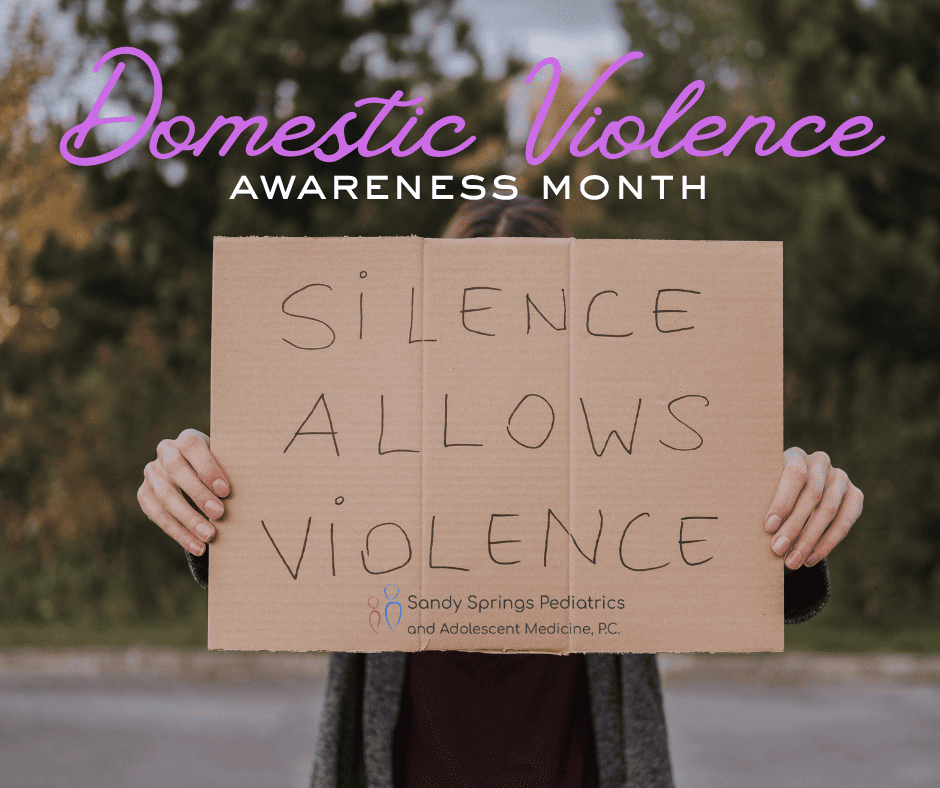
Every October, Domestic Violence Awareness Month reminds us that abuse is not only a private matter—it’s a public health issue that affects families, children, and communities. While we often think of domestic violence in adult relationships, research shows that children who witness or experience it are profoundly impacted—emotionally, mentally, and physically.
At Sandy Springs Pediatrics, we believe that understanding, prevention, and support start with awareness. This article offers pediatric and psychology-backed guidance for families—on how to recognize signs, protect children, and find help in the Atlanta area.
Understanding the Scope of Domestic Violence
Domestic violence isn’t limited to physical harm. It can include emotional abuse, coercion, isolation, financial control, and intimidation. According to the CDC, more than 1 in 4 women and 1 in 7 men experience severe physical violence by an intimate partner in their lifetime. When children are involved, even as witnesses, the effects can ripple through their development, schooling, and mental health.
Children who live in homes with domestic violence may:
- Exhibit anxiety, depression, or withdrawal
- Struggle to concentrate in school
- Regress in behavior (bedwetting, clinginess)
- Display sudden aggression or perfectionism
- Express guilt or responsibility for family conflict
How Exposure to Violence Affects Children
Pediatric psychologists emphasize that children internalize family conflict as a measure of safety. Repeated exposure to yelling, fear, or violence can alter a child’s stress response system—leading to chronic anxiety or trauma symptoms.
Yet there is hope: early intervention and a safe, supportive environment can reverse much of the emotional harm. The brain is remarkably resilient when children receive stability, love, and therapy.
If your child has witnessed or experienced domestic violence, your pediatrician can play a crucial role in screening for anxiety, behavioral changes, or developmental regression, and connecting your family to trauma-informed therapists.
For Parents in Unsafe Situations: Steps Toward Safety
If you or someone you love is in an unsafe relationship, you are not alone, and help is available 24/7. Pediatric and psychology experts stress that the first priority is safety, not confrontation.
- 1. Develop a Safety Plan: Identify a trusted friend, neighbor, or family member who can provide temporary shelter or a ride if needed.
- 2. Keep Important Documents Handy: Birth certificates, IDs, insurance cards, medications, and cash in a discreet place.
- 3. Use Discretion with Technology: Abusers often monitor phones or social media—use safe devices to research or call for help.
- 4. Call for Immediate Support: The National Domestic Violence Hotline is available 24/7 at 1-800-799-SAFE (7233) or via text “START” to 88788.
In Georgia, you can also contact:
- Georgia Domestic Violence Hotline: 1-800-334-2836
If you’re in immediate danger, call 911.
Helping Children Heal After Exposure
Children process trauma differently from adults. Psychologists recommend a gentle, consistent, and validating approach to rebuilding trust and safety:
- Tell your child they are safe now. Reassurance should be repeated frequently.
- Validate their feelings. “It’s okay to feel scared or angry. What happened wasn’t your fault.”
- Maintain structure and predictability. Routines help children rebuild a sense of control.
- Seek professional counseling. Trauma-informed therapy (such as play therapy or CBT) can help children express emotions and develop coping skills.
- Limit exposure to conflict. Even nonviolent arguments can trigger anxiety in children recovering from trauma.
How Pediatricians Can Help
Your child’s pediatrician is not only a medical provider—they’re a key ally in detecting early signs of stress or trauma. At Sandy Springs Pediatrics, our providers are trained to recognize emotional and behavioral cues that may indicate exposure to violence or chronic stress. We can help connect families with:
- Licensed child psychologists or trauma-informed therapists
- Family safety and advocacy services
- Support groups for survivors
All conversations are treated with compassion and confidentiality.
Creating a Culture of Prevention and Empowerment
Preventing domestic violence begins with teaching empathy, respect, and boundaries from an early age. Encourage children to:
- Speak up if they feel unsafe or see someone being mistreated
- Understand that love is never expressed through control or fear
- Value kindness, equality, and mutual respect in all relationships
For teens, these conversations evolve into discussions about healthy dating relationships, emotional boundaries, and digital respect—crucial lessons in today’s online world.
Atlanta-Area Resources for Families
- 💜 Partnership Against Domestic Violence (PADV) – 24-hour crisis line, shelters, counseling, and advocacy.
📞 404-873-1766 | padv.org - 💜 Georgia Coalition Against Domestic Violence (GCADV) – Training, legal advocacy, and statewide resources.
📞 1-800-334-2836 | gcadv.org - 💜 LiveSAFE Resources (Cobb County) – Shelter, advocacy, and therapy programs for survivors and children.
📞 770-427-3390 | livesaferesources.org - 💜 Children’s Healthcare of Atlanta – Strong4Life – Mental health resources for children experiencing trauma.
strong4life.com
Every child deserves to grow up in an environment filled with love, security, and peace.
If your family is healing from domestic violence—or if you fear someone close to you may be in danger—help is available, and recovery is possible.
At Sandy Springs Pediatrics, our mission is to protect the whole child—mind and body—and to stand beside families with empathy, resources, and unwavering support.
💜 You are not alone. Together, we can create homes—and communities—where safety and kindness always come first.